IMO Strengthens LNG-Fuelled Ship Safety Training in Asia
An IMO-led initiative in Japan is strengthening regional training capabilities for seafarers operating LNG-fuelled ships, combining classroom instruction, LNG bunkering simulation and emergency response exercises.
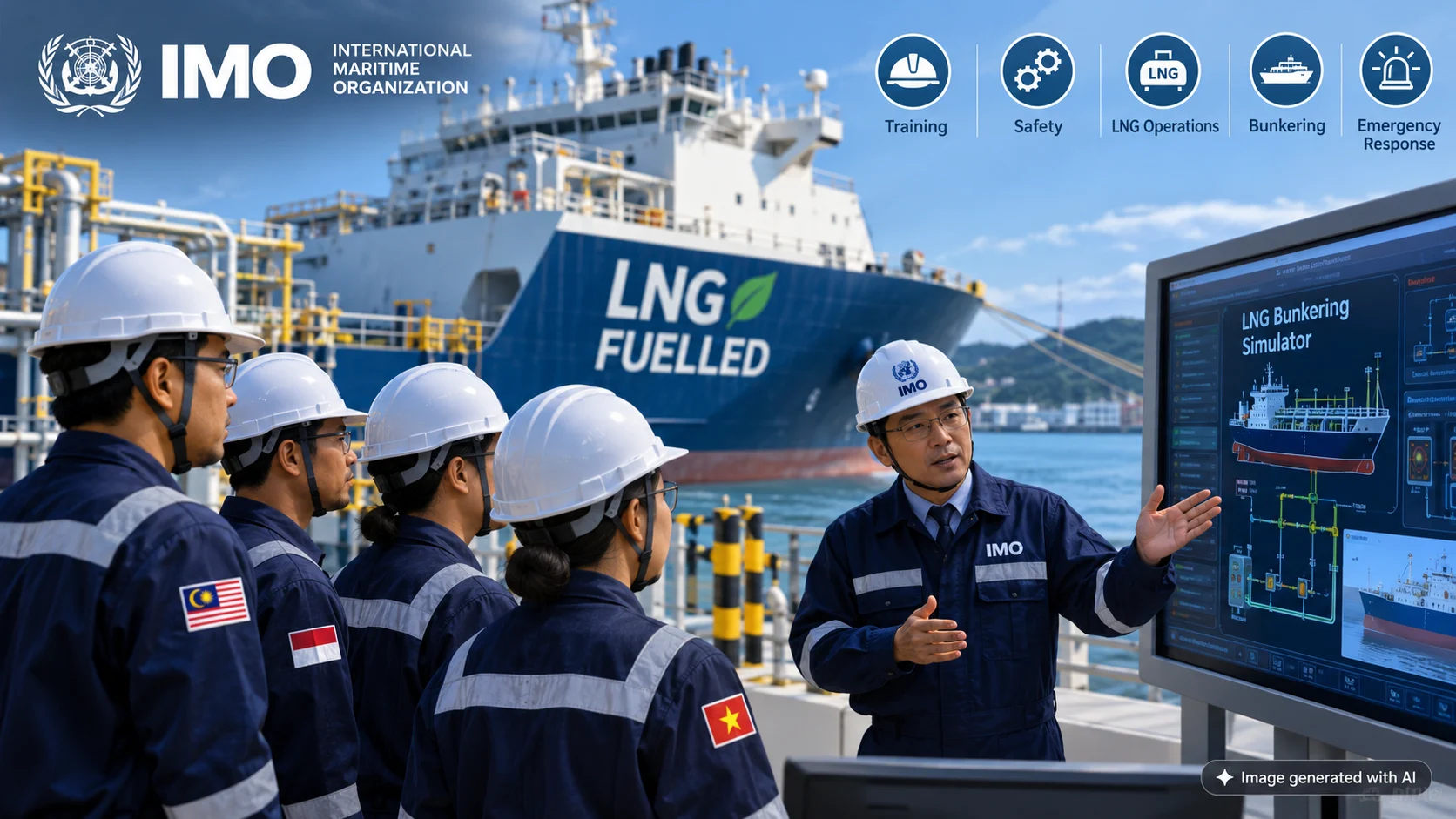
The International Maritime Organization (IMO) is strengthening regional capabilities in LNG-fuelled ship safety training through a specialist instructor development programme held in Japan. The initiative aims to improve the ability of maritime training institutions across Asia to prepare seafarers for the safe operation of vessels using liquefied natural gas (LNG) as marine fuel.
The subregional train-the-trainer workshop took place from 22 to 30 October 2026, bringing together maritime trainers from Malaysia, Indonesia, the Philippines and Viet Nam. The programme was officially reported by the IMO on 5 November 2026.
Strengthening LNG operational safety through training
The initiative focuses on transferring technical knowledge and practical training capabilities to maritime instructors, enabling them to strengthen seafarer education within their respective countries and institutions.
The programme supports the implementation of international training requirements established under the International Convention on Standards of Training, Certification and Watchkeeping for Seafarers (STCW).
Seafarers serving on ships subject to the International Code of Safety for Ships using Gases or other Low-flashpoint Fuels (IGF Code), including relevant LNG-fuelled vessels, are required to receive appropriate training for their assigned duties.
IMO Model Courses 7.13 and 7.14 provide the framework for basic and advanced training associated with ships subject to the IGF Code.
The distinction between regulatory requirements and practical competence is particularly important as maritime operators continue to develop alternative-fuel capabilities.
Practical exercises and LNG bunkering simulation
The Japanese workshop combined classroom-based instruction with practical exercises designed to connect regulatory knowledge with operational situations.
Training activities included:
- Classroom lectures covering relevant maritime training requirements.
- LNG bunkering simulator exercises at the Marine Technical College.
- Emergency response exercises at the Maritime Disaster Prevention Centre (MDPC).
- A technical visit to an LNG-fuelled ferry to examine onboard equipment, systems and operational arrangements.
The simulator component provided participants with an opportunity to explore LNG bunkering operations in a controlled training environment.
Emergency response exercises also addressed the importance of preparing maritime personnel for incidents involving alternative-fuel technologies.
By combining theoretical instruction with simulator-based and practical learning, the programme sought to strengthen the ability of instructors to deliver relevant training to seafarers.
Regional cooperation and alternative fuels
The workshop included trainers from four Southeast Asian countries, with four women among the participants.
Beyond LNG, participants also visited a hydrogen-powered tugboat, gaining exposure to another emerging marine fuel technology and its associated training requirements.
This broader perspective reflects the evolving demands placed on maritime education institutions as the shipping industry explores different pathways for reducing emissions and diversifying marine energy sources.
However, LNG and hydrogen involve different technical characteristics, operational requirements and safety considerations. Training programmes must therefore address the specific risks and competencies associated with each fuel.
Second phase of the IMO capacity-building project
The workshop marked the beginning of the second phase of an IMO project aimed at strengthening regional training capabilities for the safe operation of LNG-fuelled ships.
The project is implemented under the IMO Integrated Technical Cooperation Programme (ITCP) and is jointly led by the IMO and Japan's Ministry of Land, Infrastructure, Transport and Tourism (MLIT).
Additional support was provided by the Nippon Foundation, the Japan Ship Technology Research Association (JSTRA) and the Japan Agency of Maritime Education and Training for Seafarers (JMETS).
The initiative builds on previous capacity-building efforts and seeks to support participating countries in developing stronger maritime training capabilities.
Why LNG safety training matters
The expansion of LNG as a marine fuel creates specific training requirements for seafarers involved in the operation of gas-fuelled vessels.
Personnel must understand the relevant equipment, operational procedures and safety arrangements associated with LNG systems. Training must also prepare them to respond appropriately to abnormal situations and emergencies.
For maritime training institutions, developing qualified instructors is an important part of maintaining consistent training standards and ensuring that regulatory requirements translate into practical onboard competence.
The IMO initiative demonstrates the importance of regional cooperation in supporting this process.
As shipping continues to explore alternative fuels, sustained investment in maritime education, technical competence and emergency preparedness will remain essential to safe vessel operations.
Source: International Maritime Organization (IMO), 5 November 2026. Article independently written by the Maritime LNG Editorial Team based on the official IMO announcement.