Germany Completes Federal Floating LNG Terminal Program with Stade Commissioning
Deutsche Energy Terminal has commissioned its fourth floating LNG terminal in Stade, completing Germany's federally backed program to secure gas supplies and diversify import routes.
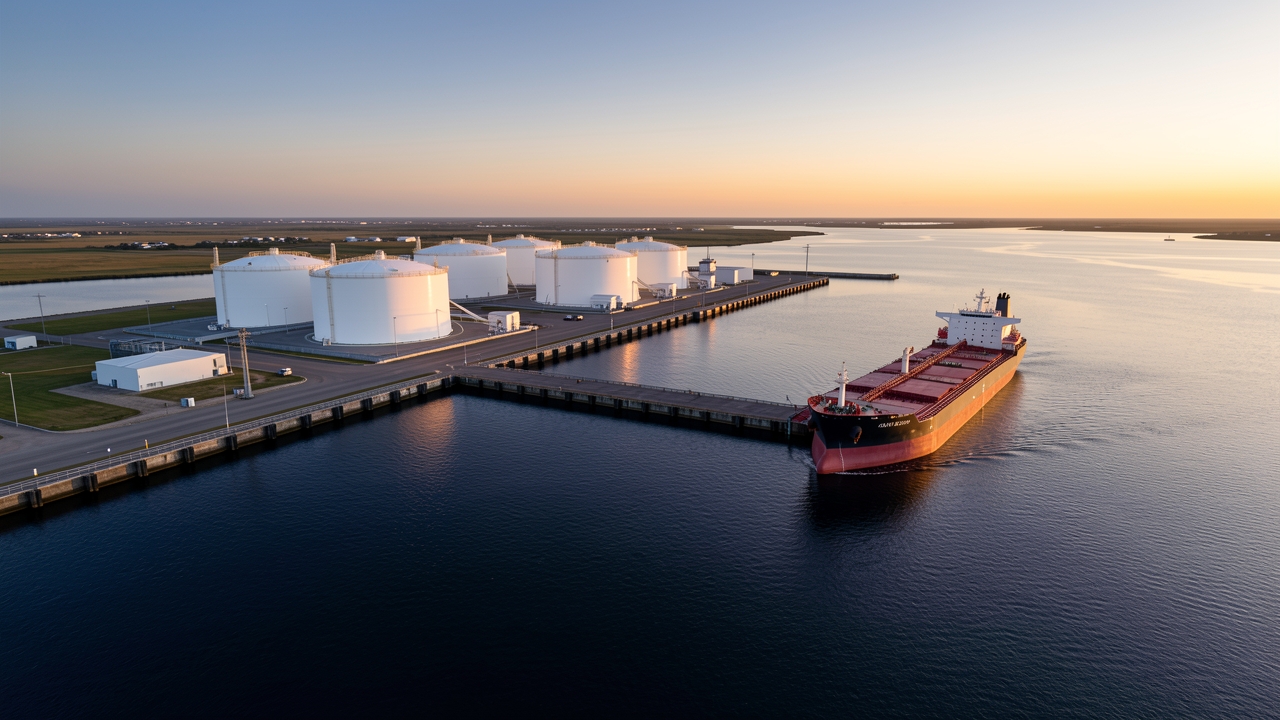
Germany’s federally commissioned liquefied natural gas (LNG) terminal program has reached a major milestone with the official commissioning of its fourth floating site in Stade. Operated by Deutsche Energy Terminal (DET)—which is part of the German Federal Ministry for Economic Affairs and Climate Action—the new facility represents a crucial step in the country's ongoing efforts to diversify its energy network and curb its historical dependence on individual gas suppliers and specific transport routes.
FSRU Energos Force Expands Grid Feed-in Capacity
The newly operational terminal utilizes the floating storage and regasification unit (FSRU) Energos Force, which receives LNG shipments from incoming carriers, regasifies the fuel onboard, and feeds the natural gas directly into the German national grid. According to DET projections, the Stade terminal is expected to feed up to 3.2 billion cubic meters of natural gas into the network in 2027. In theoretical terms, this volume matches the annual heating energy demand of approximately 2.6 million four-person households, providing immediate support for the upcoming winter heating season.
The completion of the Stade project marks the conclusion of an ambitious four-terminal floating LNG rollout delivered by DET in under four years. Alongside the new site in Stade, DET manages two operating LNG terminals in Wilhelmshaven and one in Brunsbüttel. Industry stakeholders note that realizing and commissioning these four complex floating infrastructure projects simultaneously during an acute energy emergency highlights the rapid response capabilities of German authorities and industrial partners.
Strengthening Resilience and LNG Shipping Flexibility
For the broader maritime and LNG shipping sectors, the expansion of Germany's import capacity reinforces the strategic importance of European floating infrastructure and FSRU deployments. The systematic diversification of import locations provides vessel operators with multiple discharge options, optimizing fleet utilization and voyage planning across European waters.
As state officials emphasized during the commissioning, reliable energy infrastructure remains a fundamental prerequisite for economic strength while simultaneously laying the groundwork for a transition toward climate-neutral energy supplies in the future. With the final terminal now fully integrated into the network, Germany's enhanced import flexibility serves to anchor long-term supply resilience across Northwest Europe.
Drafted with AI assistance and reviewed by the Maritime LNG Editorial Desk
Related articles
LNG Terminals Explained: Liquefaction, Storage and Regasification
A technical guide to LNG export and import terminals: gas pre-treatment, liquefaction processes, full-containment storage, marine facilities, vaporiser technologies and FSRUs.
From concept to first cargo: the stages of an LNG import terminal
Illustrative overview of feasibility, permitting, FID and commissioning phases. Demonstration content only.
Redeploying an FSRU: the questions that come first
Illustrative discussion of mooring, jetty compatibility and permitting. Demonstration content only.