LNG Carrier Cooldown Operations — Engineering, Procedures and Safety
Explore LNG carrier tank and cargo-line cooldown principles, thermal stress, vapour management, ship-shore coordination, monitoring and operational safeguards.
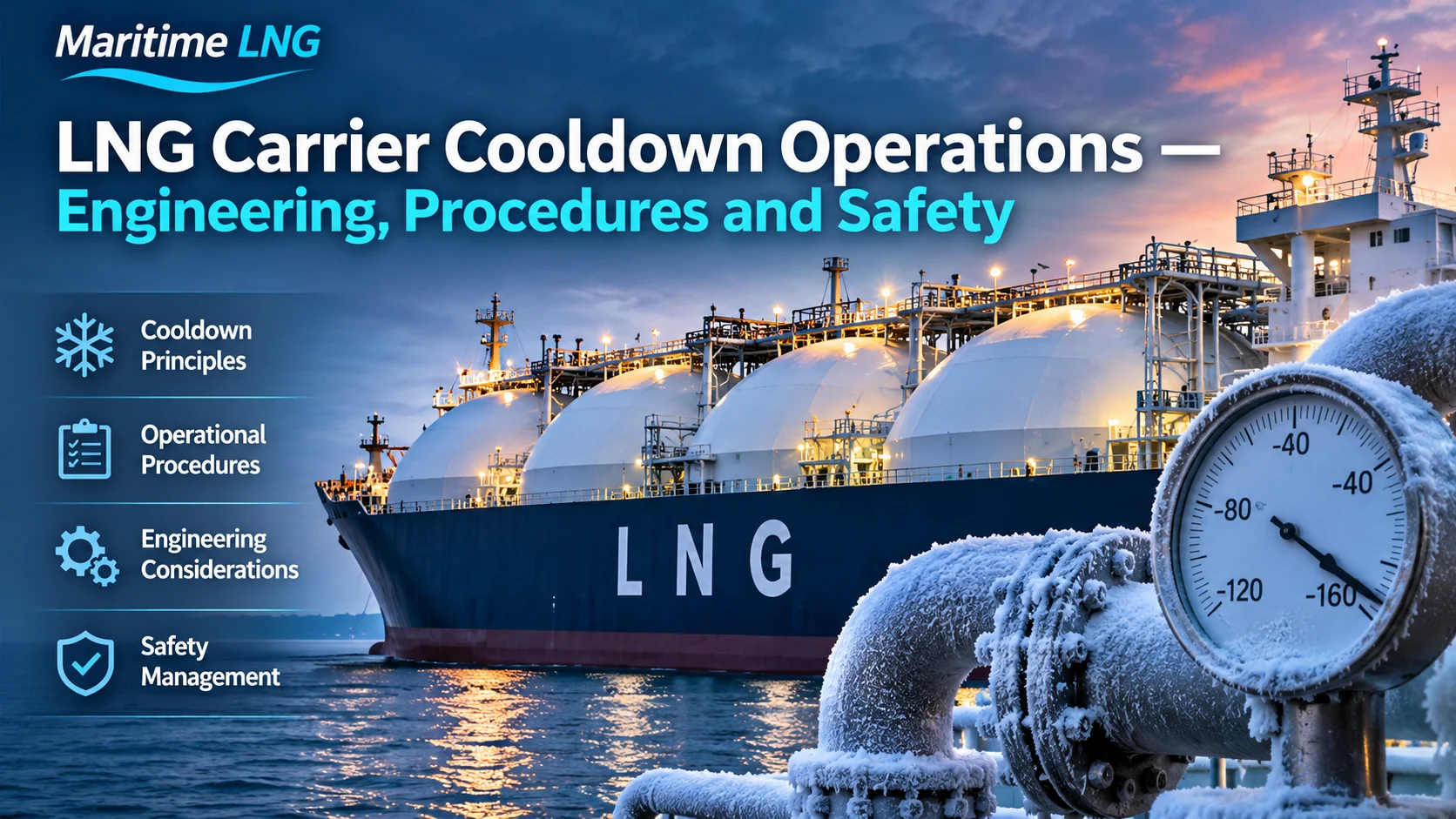
Why cooldown is a controlled engineering operation
Cooldown is the controlled reduction of temperature in cargo tanks, pipelines, valves, pumps and transfer equipment before they are exposed to substantial LNG flow. It is essential because LNG is stored at approximately −162°C, while equipment at ambient temperature can experience severe thermal gradients if cooled too quickly or unevenly. Cooldown is therefore not a simple preliminary step; it is a managed transition between warm and cryogenic operating conditions.
Thermal contraction and material response
As metal and other materials cool, they contract. Different materials and components may contract at different rates, creating stress at joints, supports, welds, seals and connected structures. A controlled cooldown allows temperatures to fall in a planned manner and gives the operator time to identify abnormal behaviour. The permissible rate is not universal: it depends on the cargo system design, material specification, equipment maker limits and approved operating procedure.
Tank cooldown and spray systems
On vessels requiring tank cooldown before loading, LNG may be introduced through a spray arrangement to cool internal tank surfaces progressively. The resulting vapour must be managed through the vessel’s cargo vapour system, which may include compressors and a vapour-return connection to shore, depending on the operation. The sequence, flow rate, tank pressure limits, temperature targets and completion criteria are vessel-specific. No generic temperature rate or duration should replace the approved cargo operating manual.
Cargo lines, manifolds and transfer arms
Pipelines, manifolds and ship-shore transfer equipment also require controlled cooling. The operation is coordinated with the terminal because the ship and shore systems form one transfer interface. Flow is normally introduced in a controlled manner, with temperature and pressure monitored at designated points. The terminal’s requirements may specify minimum or target temperatures, flow limits and a defined communication protocol. These requirements can differ between facilities and equipment types.
Vapour handling and pressure control
Cooling LNG equipment causes liquid to vaporise as heat is absorbed. The resulting vapour must be routed and controlled without exceeding the design limits of the cargo system. The IGC Code sets out accepted methods for maintaining cargo pressure and temperature and does not permit routine venting as a normal control method. The ship’s compressor capacity, vapour-return arrangement and shore system readiness are therefore important parts of the cooldown plan.
Pre-cooldown preparation
Before starting, ship and terminal personnel should agree the scope, sequence, communications, flow-control method, completion criteria and stop-work conditions. Relevant checks include cargo system line-up, valve status, instrumentation, gas detection, emergency shutdown (ESD) readiness, communications, manifold condition, transfer equipment integrity and the availability of personnel at the required stations. SIGTTO gas-trial guidance also emphasises systematic checks of safety systems, cargo equipment, controls and vapour compressors before LNG operations.
Monitoring during the operation
Monitoring should follow the vessel and terminal procedures and may include temperatures at designated locations, tank pressure, vapour-return flow, spray pressure, line condition, abnormal noise or vibration, frost patterns and evidence of leakage. Frosting alone is not a reliable completion criterion; temperature instruments and the agreed acceptance limits govern. Personnel should maintain clear ship-shore communications and record key readings and operational milestones.
Abnormal conditions and stop-work decisions
Unexpected temperature behaviour, pressure excursions, loss of vapour handling, leakage indications, communication failure or ESD malfunction may require the operation to be stopped or suspended. The response must follow the agreed ship-shore procedures and the vessel’s safety-management system. Personnel should not accelerate cooldown to recover lost time or bypass an interlock without formal authorisation under the applicable procedures.
Cooldown is vessel- and terminal-specific
A common mistake is to copy a cooldown rate or duration from another ship, terminal or training document. Those values may reflect a different containment system, pipe arrangement, equipment design or terminal interface. The controlling references are the approved cargo operations manual, terminal information booklet, ship-shore safety checklist, maker instructions and agreed pre-transfer meeting record.
Conclusion
Safe cooldown depends on controlling thermal gradients, managing vapour, maintaining system integrity and coordinating ship and shore. It is successful when the equipment reaches the specified condition through the approved procedure—not simply when a certain time has elapsed. Preparation, monitoring and the willingness to stop when conditions are abnormal are central to safe LNG operations.
Technical references
Related guides
LNG Shipping: Complete Industry Guide
A practical guide to LNG shipping for owners, operators and technical managers: carrier types, the cargo cycle from gas-up to warm-up, chartering structures, crewing and regulation.