LNG Boil-Off Gas Management: Systems, Control & Efficiency
How LNG carriers manage boil-off gas through fuel-gas systems, reliquefaction, pressure control and gas combustion—balancing safety, cargo retention and efficiency.
Introduction
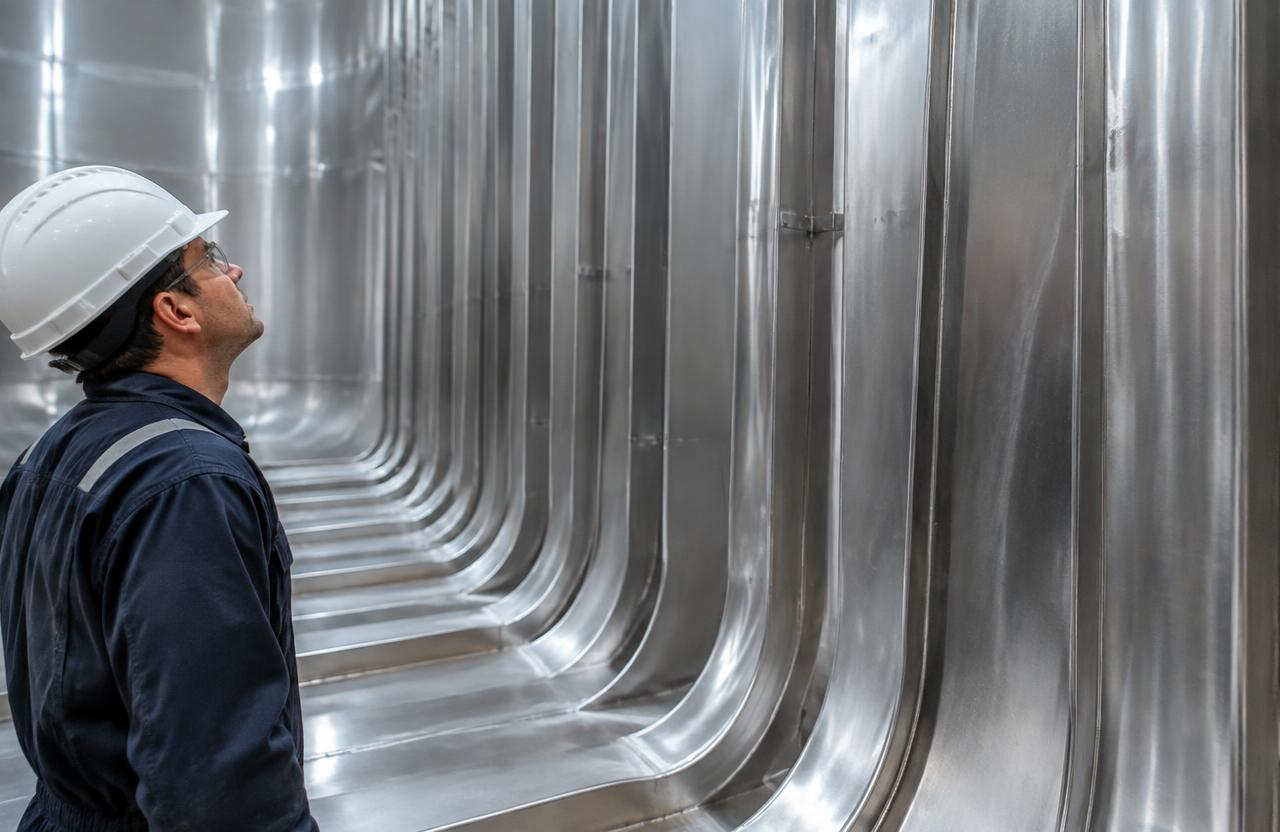
Boil-off gas (BOG) is an unavoidable consequence of carrying liquefied natural gas at cryogenic temperature. Even with highly insulated cargo tanks, heat enters the containment system from the surrounding structure and environment. A fraction of the cargo therefore changes phase, adding vapour to the tank atmosphere. On an LNG carrier, BOG management is not simply a question of reducing cargo loss: it is a core part of maintaining safe tank pressure, supplying propulsion and auxiliary consumers, and preserving operational flexibility.
Where BOG comes from
The quantity and composition of BOG depend on more than the nominal insulation performance. Cargo temperature and composition, tank pressure, ambient and sea conditions, voyage duration, tank filling pattern, ship motion and the thermal condition of the containment system all influence vapour generation. A published boil-off-rate figure is therefore a design reference under stated assumptions, not a promise that every voyage will produce the same daily quantity. Actual performance must be assessed against the vessel’s approved design data and operating records.
The gas-management chain
A typical gas-management arrangement collects vapour from the cargo tanks and routes it through compressors, conditioning equipment and control valves. Depending on the vessel’s design, BOG can be sent to the fuel-gas supply system, processed in a reliquefaction plant and returned to the cargo, or directed to a gas combustion unit (GCU) when other consumers cannot accept the available flow. Cargo tank pressure and temperature must remain within the limits established for the containment system and the cargo.
Using BOG as fuel
Using BOG as fuel can convert an otherwise unwanted cargo stream into useful energy. The gas may be conditioned, heated and brought to the pressure and quality required by the propulsion plant or auxiliary boilers. The operating benefit depends on the vessel’s engine technology, power demand, gas composition and the availability of gas consumers. If the engines require less gas than the tanks generate, the surplus still needs another approved management route. If demand exceeds natural BOG production, some ships can produce additional gas through a forced-vapourisation arrangement, subject to the vessel’s design and procedures.
Reliquefaction and return to cargo
A reliquefaction plant cools and condenses BOG so that liquid can be returned to the cargo tanks. It can reduce cargo energy losses and provide another means of controlling tank pressure. The plant’s actual value depends on capacity, electrical or shaft-power demand, operating envelope, reliability, maintenance burden and the commercial value of retained cargo. A system sized for a particular design condition may not process every possible BOG rate, so operators need a defined strategy for periods of reduced capacity or equipment unavailability.
The GCU as a pressure-control option
A GCU provides a controlled means of consuming surplus BOG when it cannot be used as fuel or reliquefied. It is not an efficiency measure in the same sense as returning gas to the cargo, but it can be an essential part of the pressure-management philosophy. Its availability, permissives, combustion performance and associated safety systems must be maintained in accordance with the maker’s instructions and the vessel’s approved procedures.
Control philosophy and operational priorities
The International Gas Carrier Code identifies recognised methods for keeping cargo pressure and temperature within design limits, including reliquefaction, thermal oxidation, pressure accumulation and liquid cargo cooling. It also makes clear that routine venting is not an acceptable pressure-control strategy except in emergency circumstances or where specifically permitted. In practice, the control philosophy must coordinate tank pressure, compressor capacity, fuel-gas demand, reliquefaction load, GCU availability and the operating status of the ship’s power plant.
Efficiency is a systems question
The lowest theoretical BOG rate does not automatically produce the lowest voyage cost. An operator should compare fuel displaced, electrical consumption, cargo retained, maintenance and availability, emissions, charter requirements and the cost of operating outside the preferred engine load. Monitoring should include trends in tank pressure and temperature, compressor performance, gas consumption, reliquefaction output and GCU running hours. A consistent mass-and-energy balance is more useful than relying on a single headline percentage.
Conclusion
Effective BOG management combines containment performance, reliable machinery, sound automation and disciplined operation. The objective is not merely to minimise vapour generation; it is to manage every unit of generated gas safely and economically. The best arrangement is the one that keeps the cargo system within its approved limits while matching gas supply to real shipboard demand and retaining a dependable alternative for surplus BOG.
Technical references
- IMO, International Code for the Construction and Equipment of Ships Carrying Liquefied Gases in Bulk (IGC Code), Chapter 7 – Cargo Pressure/Temperature Control
- U.S. Coast Guard, Liquefied Gas Carrier Field Guide / Cargo Compressor Overview
- Optimal Design of BOG Reliquefaction Systems for LNG Carriers, Korean Journal of Chemical Engineering (2024)
Related guides
LNG Cargo Containment Systems Explained
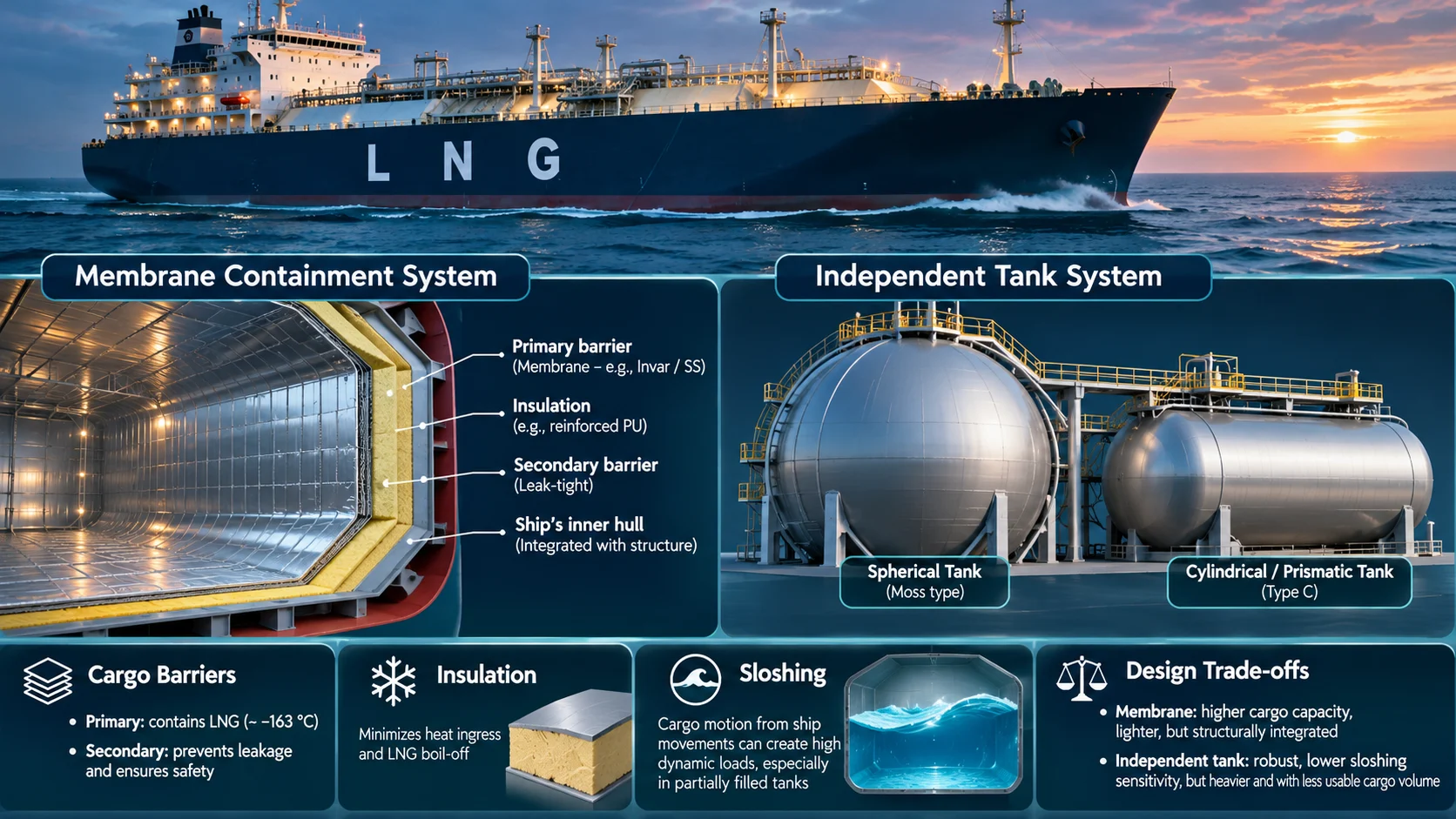
A practical guide to LNG carrier cargo containment: membrane and independent tank concepts, primary and secondary barriers, insulation, sloshing and design trade-offs.
LNG Carrier Technology: Containment Systems, Propulsion and Boil-Off Gas
Membrane and independent tank designs, steam, dual-fuel diesel-electric and two-stroke gas engines, and the options for handling boil-off gas — explained for technical decision-makers.