Home Blog Page 2

Norway’s 2025 LNG Crisis: Europe Impact

1
Hammerfest LNG
#image_title

Norway’s Hammerfest LNG Shutdown: A Supply Shock with Global Ripples


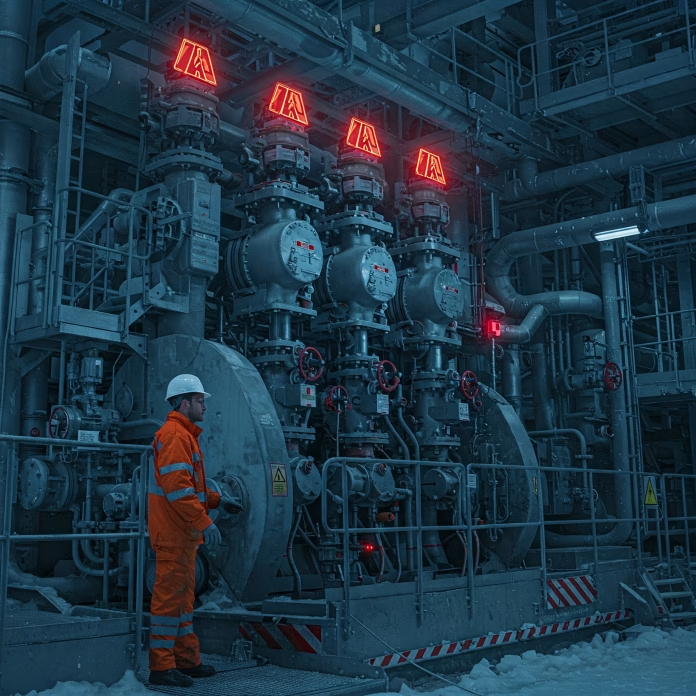
January 2025 witnessed Norway’s energy sector grappling with an unexpected crisis as Equinor’s Hammerfest LNG plant—Europe’s largest LNG export facility—halted operations due to a critical compressor failure. This disruption, lasting nearly three weeks, exposed vulnerabilities in Europe’s energy security and reshaped gas markets during peak winter demand.

The Incident: Compressor Failure Triggers Immediate Shutdown

On January 2, Equinor detected a malfunction in a CO₂ reinjection compressor at Hammerfest LNG, forcing an emergency shutdown. The facility, responsible for 6.5 billion cubic meters of annual gas exports (5% of Norway’s total), supplies enough LNG to power 6.5 million European homes. Initial repairs aimed for a January 9 restart, but complications arose when a secondary component failure necessitated importing replacement parts from Germany, extending the outage to January 19.

Key Technical Details:

  • Cause: CO₂ compressor failure in the gas treatment system
  • Impact: 100% production halt (4.3 million tons/year capacity)
  • Ownership: Equinor (36.8%), Petoro (30%), TotalEnergies (18.4%)

Market Fallout: Price Volatility and Supply Chain Adjustments

The shutdown sent immediate shockwaves through European energy markets:

  1. Price Surges:
    • Northwest European spot LNG prices spiked 12% within days.
    • Dutch TTF futures rose 4% weekly, nearing €50/MWh—a 14-month high.
  2. Supply Gaps:
    • Europe’s gas storage levels fell to 72%, down from 86% year-over-year.
    • U.S. LNG imports to Europe surged, with 3.2 million metric tons delivered by mid-January.
  3. Shipping Dynamics:
    • LNG carrier spot rates climbed 18% as rerouted cargoes increased voyage distances.

Strategic Implications for Europe’s Energy Security

The Hammerfest outage underscored Europe’s fragile post-Russia energy landscape:Geopolitical Context:

  • Norway supplies 25-30% of EU gas, surpassing Russia since 2022.
  • The shutdown coincided with Gazprom halting residual pipeline flows via Ukraine, intensifying reliance on LNG.

Infrastructure Vulnerabilities:

  • Aging equipment: Hammerfest LNG, operational since 2007, faced its fourth major outage since 2020.
  • Maintenance challenges: Arctic logistics and specialized part procurement delayed repairs.

Consumer Impact:

  • Households in Germany, France, and the UK faced upward price pressure on utility bills.
  • Industrial users in fertilizer and glass manufacturing curtailed production.

Equinor’s Response and Long-Term Mitigation

Equinor prioritized transparency during the crisis, providing daily updates via Gassco. However, the incident accelerated plans for Hammerfest’s $1.3 billion upgrade under the Snøhvit Future Project:Key Upgrades (2025-2028):

Component Impact
Onshore gas compression Extends production plateau past 2030
Grid electrification Cuts CO₂ emissions by 850,000 t/year
New 420kV power line Enables renewable energy integration

Source: Equinor’s Snøhvit Future PDO submission“Electrifying Hammerfest aligns with Norway’s goal to decarbonize oil/gas production by 2030,” stated Equinor EVP Geir Tungesvik.

Lessons for the Global LNG Industry

The Hammerfest disruption offers critical insights:

  1. Redundancy Needs: Single-point failures in critical compressors require backup systems.
  2. Inventory Management: Strategic spare parts storage mitigates Arctic logistics delays.
  3. Diversification: Europe’s increased U.S. LNG imports highlight supply chain resilience.

The Road Ahead: Restart and Market Normalization

Hammerfest LNG resumed operations on January 20, with two LNG carriers (Arctic Lady and Arctic Voyager) loading initial cargoes. However, analysts warn of lingering effects:

  • Storage Refill Challenges: Europe must replenish inventories 14% below 2024 levels before winter 2025/26.
  • Price Sensitivity: Prolonged cold snaps could trigger renewed volatility.

Equinor plans a three-month maintenance shutdown from April-July 2025, signaling ongoing infrastructure investments.

Final Analysis
Norway’s January LNG crisis exemplifies the tightrope walk between energy security and infrastructure modernization. As Europe’s gas demand grows—projected to rise 3% annually through 2030—the Hammerfest outage serves as a stark reminder: even reliable suppliers face operational risks. With electrification upgrades underway, Hammerfest aims to emerge as a low-carbon LNG hub, but its turbulent start to 2025 will linger in market memory.
US Gulf Coast LNG Export Boom 2025

1
US Gulf Coast LNG Export Boom 2025

US Gulf Coast LNG Export Boom 2025: Key Projects Reshaping Global Energy Markets

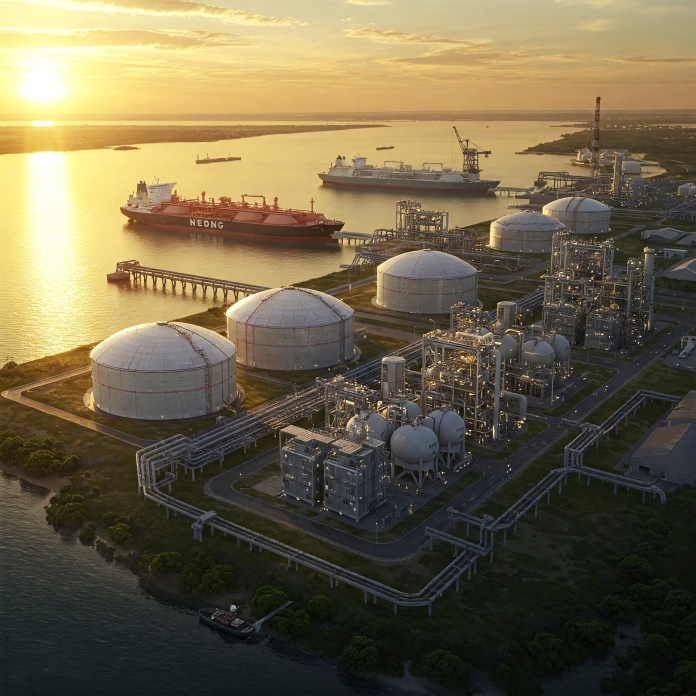
The US Gulf Coast has solidified its position as the epicenter of global liquefied natural gas (LNG) expansion, with new export terminals and capacity upgrades driving unprecedented growth. As Europe seeks alternatives to Russian gas and Asian demand climbs, these developments position the US to dominate LNG markets through 2030.

Venture Global’s Plaquemines LNG: Record-Breaking Expansion

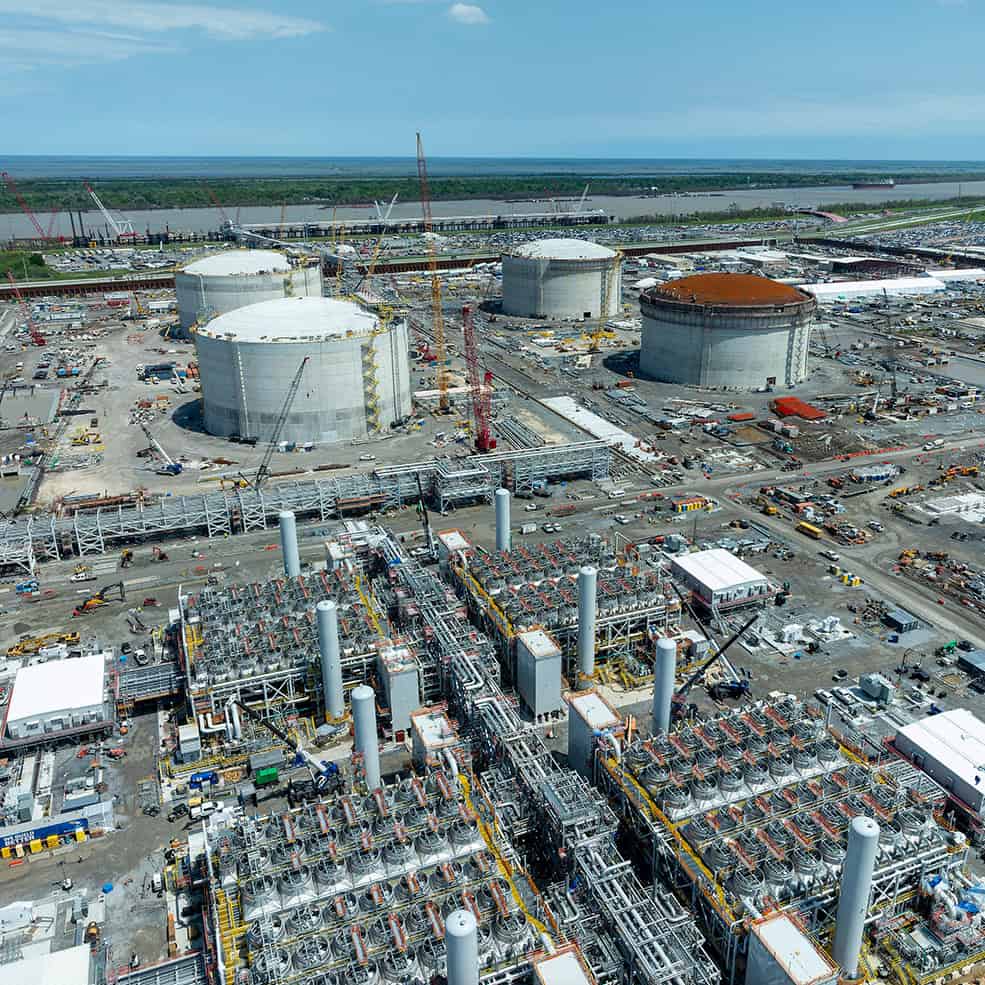
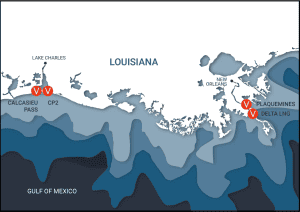
Venture Global’s Plaquemines LNG facility achieved first production in December 2024, just 30 months after its Final Investment Decision (FID) – matching the construction speed of its sister project, Calcasieu Pass. The $13.2 billion Phase 1 project will deliver:

  • 20 MTPA nameplate capacity (27.2 MTPA peak)
  • 36 modular liquefaction trains using innovative parallel construction
  • Flexibility to load commissioning cargoes while completing remaining infrastructure

Phase 2, approved in March 2023, adds another 10.7 MTPA, with full commercial operations targeted for Q3 2026. The project’s unique “commissioning while building” approach has drawn controversy but enables rapid supply deployment – critical for European buyers replacing Russian gas.

Cheniere’s Corpus Christi Stage 3: Accelerated Timelines Defy Expectations

Cheniere Energy brought forward operations at its Corpus Christi Stage 3 expansion by 6+ months, achieving first LNG production in December 2024. Key milestones:

Metric Detail
Total Capacity +10 MTPA (25 MTPA total site)
Trains Operational 1 of 7 midscale trains online
Construction Progress 77.2% complete as of Jan 2025
Full Commissioning Expected 2027

The $8 billion project utilizes Bechtel’s modular midscale design, enabling phased commissioning. Two additional trains will start in 2025, with remaining units following through 2026.

Golden Pass LNG: QatarEnergy-ExxonMobil JV Nears Finish Line

The $10 billion Golden Pass terminal (70% QatarEnergy, 30% ExxonMobil) is on track for first cargoes in late 2025:

  • 18 MTPA capacity across three mega-trains
  • Direct access to Permian Basin gas via 69-mile pipeline upgrades
  • Capacity to load Q-Max vessels (266,000 m³)

This project exemplifies growing Middle Eastern investment in US LNG infrastructure, with Qatar leveraging US projects to maintain market share against Australian rivals.

Economic & Geopolitical Impacts

Price Stabilization
New Gulf Coast capacity is narrowing the Henry Hub-TTF spread:

  • US LNG now accounts for 45% of Europe’s imports, up from 28% in 2021
  • EIA projects US export capacity hitting 21.2 Bcf/d by 2028 – double 2023 levels

Infrastructure Boom
$50 billion in active investments drive ancillary growth:

  • Pipeline Expansions: 2,600+ miles of new gas pipelines under construction
  • Bunkering Networks: Bunker One’s NW Europe entry complements Seaspan’s West Coast STS operations
  • Employment: 75,000+ temporary construction jobs created across LNG projects

Geopolitical Leverage
US LNG’s destination-flexible contracts counter China’s attempts to dominate Asian markets:

  • 65% of 2025 capacity expansions contracted to EU buyers
  • Qatar’s Golden Pass stake creates OPEC-US production alignment

Challenges & Controversies

Environmental Pushback
Despite claims of methane reduction, projects face legal challenges:

  • Sierra Club lawsuits target 12 proposed Gulf Coast facilities
  • DOE study questions sustainability of 42 Bcf/d potential capacity

Commissioning Disputes
Venture Global’s extended pre-commercial phases (3+ years at Calcasieu Pass) spark arbitration cases from Shell, BP, and others. Critics argue the practice distorts markets by flooding spot markets with “commissioning cargoes”.Grid Constraints
ERCOT warns LNG projects could strain Texas’ power grid:

  • LNG facilities consume ~500 MW daily – equivalent to 350,000 homes
  • 2024 winter freeze tests prompted contingency plans

The Road Ahead: 2025-2030 Outlook

Project Pipeline
Under-construction and planned facilities will reshape trade flows:

Project Capacity (MTPA) Online Date
Rio Grande LNG Phase 1 11.6 2027
Port Arthur LNG 13.5 2026
Lake Charles LNG 16.5 2028

Market Shifts

  • Asian Demand Surge: Japan/Korea seek 15+ MTPA new contracts by 2026
  • Floating LNG Growth: New Fortress Energy’s Fast LNG projects target 2026 deployment
  • Carbon Capture Integration: NextDecade’s Rio Grande LNG pairs 5 MTPA capacity with 90% emission cuts

Strategic Implications
The Gulf Coast LNG boom positions the US as the indispensable global energy partner, with export capacity exceeding Qatar and Australia combined by 2026. However, success hinges on balancing environmental concerns, grid reliability, and geopolitical demands. As Cheniere CEO Jack Fusco notes: “Our ability to deliver LNG faster than competitors gives America unmatched leverage in reshaping 21st-century energy alliances”.With 47 MTPA of new global LNG capacity coming online in 2025 – 70% from US projects – the Gulf Coast’s steel-and-concrete shoreline will dictate energy economics for decades.

Red Sea Ceasefire Reshapes LNG Shipping

1
Red Sea Ceasefire Reshapes LNG Shipping
#image_title

Red Sea Tensions Reshape LNG Shipping Dynamics: A Comprehensive Analysis

The recent Israel-Hamas ceasefire has ushered in a new era for LNG shipping through the Red Sea, with far-reaching implications for global energy markets. This article delves into the multifaceted impact of the situation on LNG transportation, exploring the challenges and opportunities that have emerged in its wake.

Resumption of Suez Canal Transits

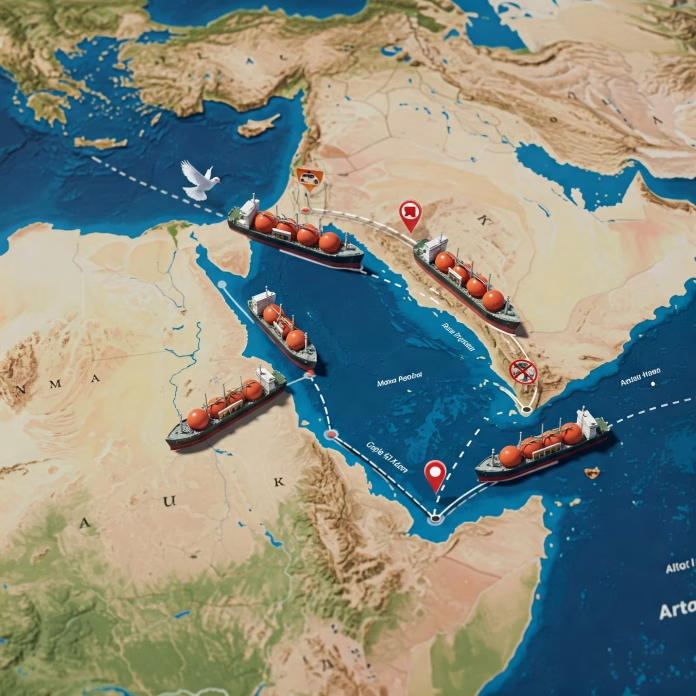
Following the ceasefire agreement, LNG carriers have gradually resumed their passages through the Suez Canal. Industry data indicates that transit volumes have rebounded to approximately 85% of pre-conflict levels. This resurgence marks a significant step towards normalizing one of the world’s most critical maritime chokepoints for energy transportation.The Suez Canal, which connects the Mediterranean Sea to the Red Sea, serves as a vital shortcut for LNG shipments between Europe and Asia. Its reopening to regular traffic has been welcomed by energy traders and shipping companies alike, potentially easing some of the logistical pressures that had built up during the conflict.

Lingering Insurance Concerns

Despite the positive developments, Drewry, a leading maritime research firm, warns that the situation remains complex. One of the most pressing issues is the persistence of elevated insurance premiums for vessels traversing the Red Sea region.These increased costs stem from the perceived ongoing risks in the area, even in the aftermath of the ceasefire. Shipping companies are grappling with war risk surcharges and higher hull and machinery insurance rates, which can add significant expenses to each voyage.The insurance industry’s cautious stance reflects a broader uncertainty about the long-term stability of the region. Until there is sustained evidence of security, these premium hikes are likely to remain a factor in shipping calculations.

Route Diversification Strategies

In response to the evolving situation, many LNG shippers are adopting flexible routing strategies. While the Suez Canal route has reopened, some companies are maintaining alternative options to mitigate potential risks.QatarEnergy, one of the world’s largest LNG exporters, has taken a particularly noteworthy approach. The company has temporarily redirected a portion of its shipments via the Cape of Good Hope. This longer route around the southern tip of Africa adds considerable time and fuel costs to the journey but provides a safer alternative during periods of heightened tension.This diversification strategy highlights the industry’s adaptability in the face of geopolitical challenges. It also underscores the importance of maintaining multiple viable shipping routes to ensure the resilience of global LNG supply chains.

Impact on Global LNG Prices

The Red Sea situation has introduced new volatility into global LNG pricing mechanisms. The initial disruption caused by the conflict led to sharp spikes in spot prices, particularly in European markets that rely heavily on Qatar’s LNG exports.As transit through the Suez Canal normalizes, prices have begun to stabilize. However, the market remains sensitive to any news or incidents that could potentially disrupt the fragile balance. Traders are closely monitoring the situation, with many incorporating geopolitical risk premiums into their pricing models.The longer-term impact on LNG prices will depend on how quickly and completely normal shipping patterns can be restored. Any persistent rerouting or delays could lead to regional supply imbalances and price disparities.

Technological Adaptations

The Red Sea crisis has accelerated the adoption of certain technologies within the LNG shipping industry. Real-time vessel tracking and risk assessment tools have become increasingly sophisticated, allowing shipping companies to make more informed routing decisions.Additionally, there’s growing interest in developing LNG carriers with enhanced security features. This includes improved communication systems, reinforced hulls, and advanced anti-piracy measures. While these developments were already underway, the recent events have heightened their priority within the industry.

Geopolitical Implications

The situation in the Red Sea has broader geopolitical ramifications for the LNG trade. It has highlighted the vulnerability of key maritime chokepoints and prompted discussions about energy security among major importing nations.European countries, in particular, are reassessing their LNG supply strategies. There’s a renewed focus on diversifying sources and investing in storage infrastructure to buffer against potential disruptions. This could lead to long-term shifts in global LNG trade patterns and investment decisions.

Environmental Considerations

The rerouting of LNG tankers around Africa has raised environmental concerns. The longer voyages result in increased fuel consumption and higher greenhouse gas emissions. This has reignited debates about the environmental footprint of LNG transportation and the need for cleaner shipping technologies.Some industry observers argue that these events underscore the importance of developing alternative energy sources and more localized supply chains to reduce reliance on long-distance LNG shipping.

Conclusion

The Red Sea situation continues to have a profound impact on the LNG shipping industry. While the resumption of Suez Canal transits is a positive development, the lingering effects on insurance costs, routing strategies, and global prices demonstrate the complex interplay between geopolitics and energy markets.As the industry navigates these challenges, it’s clear that flexibility, technological innovation, and a keen understanding of geopolitical risks will be crucial. The events in the Red Sea serve as a reminder of the vital role that secure and efficient maritime transportation plays in the global energy landscape.Looking ahead, stakeholders across the LNG value chain will need to remain vigilant and adaptive. The lessons learned from this episode will likely shape risk management strategies and investment decisions in the LNG shipping sector for years to come.

Risk vs. Resilience at Sea

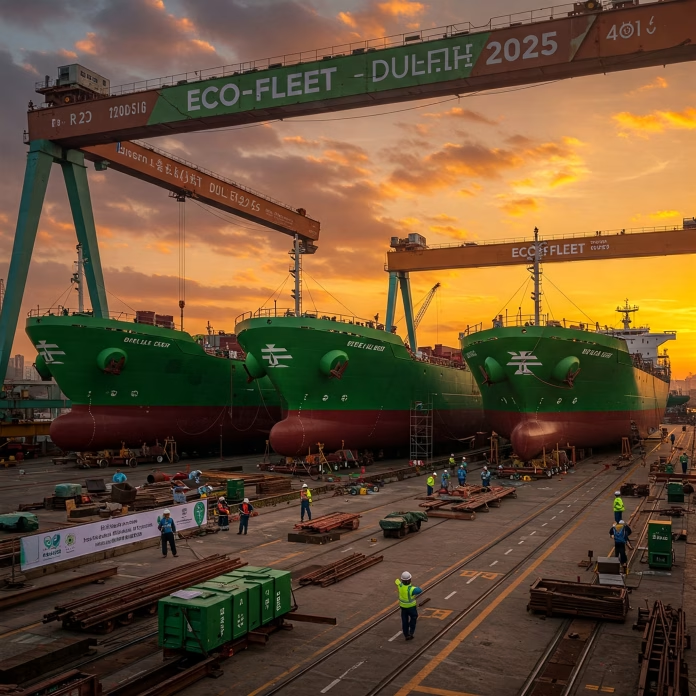
Green Ships Surge: 2024’s Eco-Fleet Boom

1
Green Ships Surge: 2024's Eco-Fleet Boom
#image_title

Eco-Friendly Shipping Hits Record High: 2024 Sees Surge in Green Vessel Orders

The maritime industry closed out 2024 with a remarkable achievement. Over 300 alternative-fueled vessel orders were placed, marking a significant shift towards greener shipping practices. This surge reflects the industry’s response to tightening emissions regulations and a growing commitment to sustainability.

LNG-Powered Vessels Lead the Way

Among the various eco-friendly options, LNG-powered ships dominated the orders. These vessels offer a cleaner burning alternative to traditional marine fuels, significantly reducing harmful emissions. The preference for LNG highlights its role as a transitional fuel in the maritime sector’s decarbonization journey.

Investment in Green Technology Soars

A key driver behind this trend is the substantial increase in green investment. Compared to the previous year, 2024 saw a 45% jump in funding allocated to environmentally friendly shipping technologies. This boost in financial support has enabled shipowners to pursue more sustainable fleet options.

Asian Shipyards at the Forefront

Major Asian shipyards reported that 70% of their order books now comprise dual-fuel vessels. This statistic underscores the global nature of the shift towards cleaner shipping. South Korean and Chinese shipbuilders, in particular, have been at the forefront of this green revolution, adapting their facilities to meet the growing demand.

Regulatory Pressures Drive Change

The International Maritime Organization’s (IMO) stricter emissions targets have played a crucial role in this trend. With new regulations set to take effect in the coming years, shipowners are proactively upgrading their fleets to ensure compliance and avoid potential penalties.

Beyond LNG: Exploring Other Alternatives

While LNG leads the pack, other alternative fuels are also gaining traction. Orders for vessels powered by methanol, hydrogen, and even ammonia have increased, albeit in smaller numbers. This diversification suggests a multi-pronged approach to maritime decarbonization.

Economic Implications

The shift towards eco-friendly vessels is not just an environmental win; it’s reshaping the economics of shipping. While initial costs for these ships are higher, long-term fuel savings and compliance with future regulations make them an attractive investment for forward-thinking companies.

Challenges Ahead

Despite the positive trends, challenges remain. The availability of alternative fuels at ports worldwide is still limited, and the infrastructure for widespread adoption is under development. Additionally, the higher upfront costs of eco-friendly vessels can be a barrier for smaller shipping companies.

Looking to the Future

As we move further into 2025, industry experts predict this trend will continue to accelerate. With more stringent environmental regulations on the horizon and increasing pressure from consumers for sustainable supply chains, the demand for green vessels is expected to grow even further.

Conclusion

The record-breaking number of eco-friendly vessel orders in 2024 marks a turning point for the maritime industry. It signals a strong commitment to sustainability and sets the stage for a greener future in global shipping. As technology advances and infrastructure improves, we can expect to see even more innovative solutions emerging in the quest for cleaner seas.

BP’s Africa LNG Milestone Achieved

2
BP's African LNG Breakthrough: Offshore Milestone
#image_title

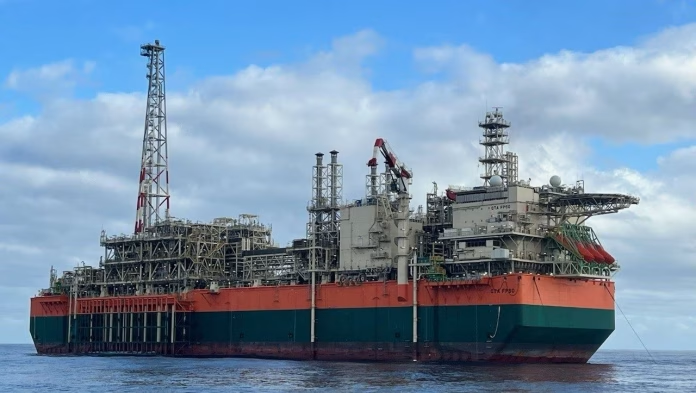
BP Achieves Milestone: First Gas Flows at Greater Tortue Ahmeyim LNG Project

In a groundbreaking development for Africa’s energy sector, BP has successfully initiated gas production at the Greater Tortue Ahmeyim (GTA) LNG project. This achievement marks a significant milestone in offshore LNG technology and African energy production.

Deepest Offshore LNG Development in Africa

The GTA project stands out as the deepest offshore LNG development on the African continent. Located in ultra-deep waters straddling the maritime border between Mauritania and Senegal, this project pushes the boundaries of engineering and showcases BP’s technical expertise in challenging environments.

Strategic Importance for European Energy Security

With its strategic location on Africa’s western coast, the GTA project is poised to play a crucial role in enhancing Europe’s energy security. Industry analysts project that by 2026, this single development could supply up to 10% of Europe’s LNG demand, offering a diversified source of natural gas for the continent.

Economic Impact on Mauritania and Senegal

The commencement of gas production at GTA represents a significant economic boost for both Mauritania and Senegal. It’s expected to:

  • Create thousands of local jobs
  • Attract foreign investment
  • Provide substantial government revenues

Environmental Considerations

BP has emphasized its commitment to environmental stewardship throughout the project’s development. The company has implemented:

  • Advanced emissions monitoring systems
  • Stringent waste management protocols
  • Biodiversity protection measures

Future Expansion Plans

With the successful start of production, BP and its partners are already looking ahead to potential expansion opportunities. Plans for additional development phases are under consideration, which could further increase the project’s production capacity and economic impact on the region.

Industry Implications

The achievement at GTA sets a new benchmark for deep-water LNG developments globally. It demonstrates the viability of complex offshore projects in frontier regions and may encourage similar investments across Africa’s energy-rich coastal areas.

Conclusion

BP’s success in bringing the Greater Tortue Ahmeyim LNG project online represents a major leap forward for Africa’s energy sector. As production ramps up, the project is set to become a cornerstone of regional economic development and a key player in the global LNG market.

Source : BP.COM

Top 10 LNG & Maritime Shifts Jan 2025

0
Top 10 LNG & Maritime Shifts Jan 2025
#image_title

Top 10 LNG & Maritime Industry Developments Shaping January 2025

The LNG and maritime sectors experienced a dynamic start to 2025, marked by major project launches, market shifts, and regulatory changes. From groundbreaking energy projects to evolving shipping trends, here’s an optimized breakdown of January’s most impactful developments.

1. BP Achieves First Gas at Africa’s Deepest Offshore LNG Project

BP successfully initiated production at the Greater Tortue Ahmeyim LNG development, setting a new benchmark for African offshore operations. Located on the Mauritania-Senegal border, this project strengthens Europe’s energy security while showcasing Africa’s growing LNG potential. Analysts predict it could supply up to 10% of Europe’s LNG demand by 2026.

2. Eco-Friendly Shipping Hits Record High in 2024

The maritime industry closed 2024 with over 300 alternative-fueled vessel orders, dominated by LNG-powered ships. This surge reflects tightening emissions regulations and a 45% year-over-year increase in green investment. Notably, major Asian shipyards now report 70% of their order books comprise dual-fuel vessels.

3. Red Sea Shipping Dynamics Shift Post-Ceasefire

Following the Israel-Hamas ceasefire, LNG carriers resumed Suez Canal transits at 85% of pre-conflict levels. However, Drewry warns of lingering insurance premium hikes and potential route diversification. Meanwhile, QatarEnergy temporarily redirected some shipments via the Cape of Good Hope.

4. US Gulf Coast Expands LNG Export Capacity

Venture Global secured contracts for early 2025 cargoes from its Plaquemines facility, while Cheniere Energy commenced operations at Corpus Christi’s Stage 3 expansion. Together, these projects add 20 million tons/year to U.S. export capacity, cementing America’s position as the world’s top LNG exporter.

5. Norway Faces Unexpected LNG Supply Disruption

Equinor’s Hammerfest LNG plant halted operations due to a critical compressor failure, removing 6.5 million tons/year from European markets. The outage triggered a 12% spot price spike in Northwest Europe, with repairs expected to take six weeks.

6. Maritime Regulatory Landscape Evolves

President Biden appointed Louis E. Sola as Federal Maritime Commission Chairman, signaling potential policy shifts in port infrastructure and decarbonization incentives. Industry groups anticipate accelerated approvals for LNG bunkering facilities along U.S. coasts.

7. LNG Shipping Rates Show Recovery Signs

After hitting 2024 lows, LNG carrier spot rates climbed 18% in January. Shipbrokers attribute this to increased Asian demand and longer voyage distances for diverted cargoes. The Baltic Exchange forecasts further 15-20% gains through Q1 2025.

8. Bunker One Enters Northwest Europe LNG Market

The fuel supplier launched LNG bunkering operations in Rotterdam and Hamburg, challenging Shell’s regional dominance. This expansion coincides with new EU mandates requiring major ports to offer LNG fueling by 2026.

9. North America Advances Bunker Infrastructure

Seaspan completed the first LNG ship-to-ship transfer off California, enabling cleaner fuel access for Pacific trade routes. The operation involved a specialized bunker vessel serving a CMA CGM container ship.

10. Competing Energy Solutions Emerge

While LNG dominated headlines, January saw increased testing of ammonia-powered vessels and carbon capture systems. Mitsui OSK Lines conducted successful trials of a liquefied CO2 carrier, hinting at future market diversification.

Industry Outlook
January’s developments highlight the LNG sector’s critical role in global energy transitions, though challenges persist. Supply chain disruptions, competing technologies, and evolving regulations will likely dominate 2025’s narrative. As shipping giants like Maersk and CMA CGM expand LNG fleets, the industry appears poised for strategic growth despite market volatility.

Key Takeaway: The LNG and maritime sectors are navigating a complex landscape where environmental mandates, geopolitical shifts, and technological innovation converge to reshape global trade patterns.


WA Grants Environmental Approval for North West Shelf

0
North West Shelf environmental approval
#image_title

WA Grants Environmental Approval for North West Shelf

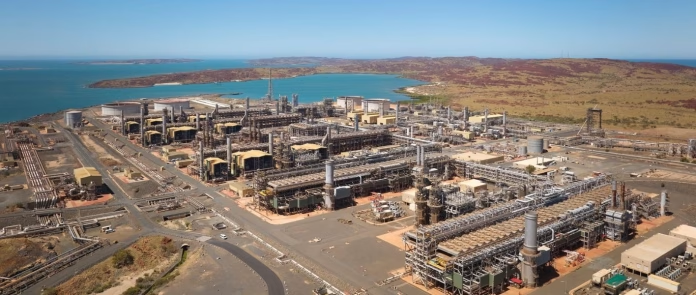
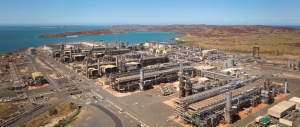
The Western Australian government has granted environmental approval to Woodside Energy’s North West Shelf Project Extension, clearing a critical hurdle for the Karratha Gas Plant to continue operations through at least 2025. This decision follows a rigorous six-year regulatory review and ensures Australia’s largest LNG project remains operational amid growing global energy demands.

Key Details of the Approval

Announced in December 2024, the approval allows the Karratha Gas Plant to process gas from the North West Shelf Joint Venture fields and third-party reservoirs. Notable aspects include:

  • Continuation of gas exports contributing 10% of global LNG supply
  • Ongoing domestic gas production equivalent to powering 30 million WA homes annually
  • Legally binding commitments to reduce nitrogen oxides (NOx) and volatile organic compounds (VOCs)
North West Shelf environmental approval
Source: www.woodside.com

The Karratha Gas Plant, operational since 1984, processes gas for domestic and international markets. Source: Woodside Energy

Why This Decision Matters for Energy Markets

With 35 years of LNG exports and 40 years of domestic gas production, the project has:

  • Supplied over 6,000 petajoules of gas – enough to power Perth for 175 years
  • Generated $40 billion+ in royalties and excise payments
  • Maintained Australia’s position as a top LNG exporter to Asia

Environmental Safeguards and Traditional Engagement

Under the approval terms, Woodside must:

  • Implement annual greenhouse gas reduction plans starting 2025
  • Conduct quarterly air quality monitoring around the Burrup Peninsula
  • Consult with Traditional Owners through structured cultural heritage programs

Executive VP Liz Westcott confirmed: “We’re upgrading turbine technologies to cut emissions by 12% before 2030, while maintaining WA’s stringent environmental compliance.”

Economic Impact on Northern WA

The approval safeguards:

  • 3,200 direct jobs in the Pilbara region
  • Ongoing $18 million/year investments in local communities
  • Future expansion potential for third-party gas processors

Since 1984, the project has funded:

  • $300 million+ in regional infrastructure (ports, schools, hospitals)
  • Training programs for Indigenous businesses in the Murujuga area

Next Steps: Federal Approval Process

With state approvals secured, focus shifts to:

  • Federal environmental assessments expected by Q2 2025
  • Final investment decisions on Browse Basin gas fields
  • Negotiations with Japanese/Korean LNG buyers for contract renewals

A 40-Year Legacy Fueling Australia’s Future

As the NWS Project marks four decades of operation, analysts note:

  • Capacity to supply 5% of Asia-Pacific LNG through 2040
  • Potential integration with WA’s emerging hydrogen economy
  • Ongoing role balancing energy security and climate targets


Ammonia as Next-Gen Fuel: Mitsui O.S.K. Lines BLUE ACTION 011 Decarbonizes Shipping

0
ultra-large ammonia carrier by MOL.
#image_title

Mitsui O.S.K. Lines (MOL) Unveils BLUE ACTION 011: Pioneering Ammonia as a Next-Generation Fuel for a Decarbonized Future

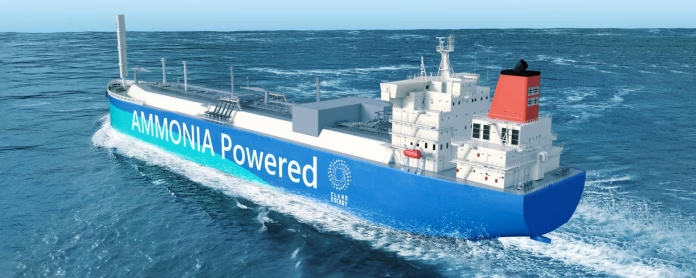
As global industries seek carbon-neutral solutions, Mitsui O.S.K. Lines (MOL) emerges as a maritime leader with its BLUE ACTION 011 initiative, pioneering ammonia as a next-generation fuel for a decarbonized future. By combining ultra-large ammonia carriers with wind-assisted propulsion, this groundbreaking program addresses two critical challenges simultaneously: clean fuel transportation and emission-free ship operations.

Why Ammonia Powers Decarbonization Efforts

While primarily known for fertilizer production, ammonia (NH₃) now shows promise as a game-changing energy source. Unlike traditional fuels, it releases zero CO₂ during combustion, making it particularly valuable for hard-to-decarbonize sectors.Three key applications drive its adoption:

  1. Power generation: Utilities can blend ammonia with coal to immediately cut emissions, with future systems targeting 100% ammonia use.
  2. Marine fuel: Shipping companies increasingly view it as an ideal alternative, especially with new engine technologies enabling pure ammonia combustion.
  3. Hydrogen carrier: Its ability to safely store and transport hydrogen energy positions ammonia as critical for global clean energy distribution.

MOL capitalizes on these advantages through BLUE ACTION 011, recognizing ammonia’s unique potential to accelerate decarbonization across industries.

BLUE ACTION 011: Transforming Ammonia Transport

Building on 50+ years of ammonia shipping experience, MOL’s initiative introduces revolutionary technologies:

1. Dual-Purpose Ultra-Large Carriers

These 230-meter vessels transport 87,000m³ of ammonia while using it as fuel. Consequently, they reduce greenhouse gas emissions by 40% compared to conventional ships.

2. Wind Challenger Propulsion System

Mounted on carrier decks, this foldable sail system harnesses wind power to cut fuel consumption. When combined with ammonia fuel, emissions drop by over 90% on specific routes.

3. Ship-to-Ship Transfer Breakthrough

In 2024, MOL demonstrated safe ammonia transfers between moving vessels—a critical step for establishing offshore bunkering networks.

Building a Global Ammonia Supply Chain

MOL collaborates with 15+ partners to strengthen every link in the ammonia value chain:

Stage Innovation Impact
Production Scaling green ammonia plants 2M ton/year capacity by 2030
Storage Cryogenic tank development Enables long-term preservation
Transportation Fleet expansion with Wind Challenger 30% lower transport emissions
Utilization Co-firing trials in power plants 20% emission reduction per facility

This comprehensive approach ensures ammonia meets 15% of global maritime energy needs by 2040, according to MOL projections.

Accelerating the Energy Transition

BLUE ACTION 011’s impact extends beyond shipping:

  • Power sector: Enables coal-dependent regions to transition smoothly
  • Hydrogen economy: Solves storage/transport challenges for green hydrogen
  • Global trade: Creates clean corridors for energy-importing nations

“Ammonia isn’t just an alternative fuel—it’s the key to unlocking systemic decarbonization,” states MOL’s Chief Technology Officer.

The Road Ahead

While challenges like green ammonia production costs remain, MOL’s $1.2B investment signals strong market confidence. With 12 next-gen carriers slated for delivery by 2028, BLUE ACTION 011 positions ammonia as the maritime sector’s primary decarbonization tool this decade.

ADNOC Gas Inks $450M LNG Deal with JERA

0
ADNOC Gas Inks $450M LNG Deal with JERA
#image_title

ADNOC Gas Inks $450M LNG Deal with JERA

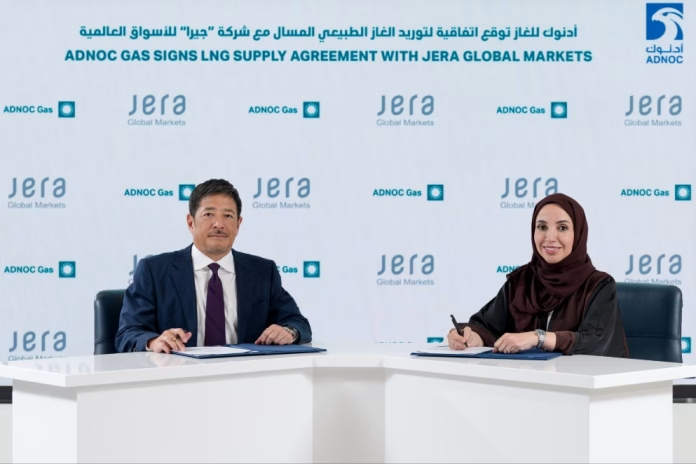
ADNOC Gas Inks $450M LNG Deal with JERA, a leading integrated gas processing company, has announced a significant milestone in its global LNG operations. On January 27, 2025, the company signed a $450 million liquefied natural gas (LNG) supply agreement with JERA Global Markets Pte. Ltd., further solidifying its position as a reliable global supplier of clean energy.

Key Highlights of the Agreement

  • Duration: Three-year supply contract
  • Value: $450 million (AED1.653 billion)
  • Source: Das Island liquefaction facility
  • Capacity: Approximately 6.0 million tons per annum (mtpa)

This latest agreement builds upon a similar supply deal from 2023, underscoring the strong, long-standing relationship between ADNOC Gas and Japanese energy companies spanning nearly five decades.

Strengthening UAE-Japan Energy Ties

The partnership between ADNOC Gas and JERA Global Markets reflects the robust energy relationship between the United Arab Emirates and Japan. For 48 years, ADNOC Gas’ Das Island LNG facilities have been a reliable supplier to Japanese energy companies, with over 3,500 LNG cargoes shipped worldwide since operations began.Fatema Al Nuaimi, CEO of ADNOC Gas, emphasized the significance of this agreement, stating, “This agreement builds on the robust UAE-Japan energy relationship and decades of collaboration between ADNOC Gas and JERA solidifying our shared commitment to ensuring energy security and enabling a lower-carbon future.”

Supporting Global Energy Transition

As the world moves towards cleaner energy solutions, LNG plays a crucial role in the transition to a lower-carbon future. This agreement aligns with both companies’ ambitions to advance sustainable energy practices while ensuring energy security.Kazunori Kasai, Chief Optimization Officer of JERA Co., Inc. and Chairman of JERA Global Markets, highlighted the importance of this partnership in providing energy security to the communities they serve.

ADNOC Gas: A Global LNG Leader

ADNOC Gas continues to strengthen its position in the global LNG market through strategic partnerships and reliable supply agreements. The Das Island liquefaction facility, as the world’s third longest-operating LNG plant, showcases the company’s expertise and commitment to meeting global energy demands.

Looking Ahead

As the energy landscape evolves, ADNOC Gas remains committed to supporting global energy needs while advancing sustainable practices. This latest agreement with JERA Global Markets not only reinforces the company’s role as a preferred LNG supplier but also contributes to the broader goal of transitioning to cleaner energy solutions.The collaboration between ADNOC Gas and JERA Global Markets serves as a model for international energy partnerships, balancing the need for energy security with the imperative of reducing carbon emissions. As the global demand for cleaner energy sources continues to grow, such agreements will play a crucial role in shaping the future of the energy industry.

Source: ADNOC GAS

LNG IPO: Venture Global Debuts

0

LNG IPO: Venture Global Debuts $25 Per Share IPO Marks Major Milestone for LNG Leader

Venture Global, a prominent player in the U.S. liquefied natural gas (LNG) sector, has officially announced the pricing of its initial public offering (IPO). The company is set to offer 70 million shares of its Class A common stock at a public price of $25.00 per share. Trading is expected to begin on January 24, 2025, on the New York Stock Exchange under the ticker symbol “VG.”

Key Details of the IPO

The IPO includes an option for underwriters to purchase an additional 10.5 million shares within 30 days, potentially increasing the total offering size. The closing of the offering is anticipated on January 27, 2025, pending customary closing conditions.

Goldman Sachs & Co. LLC, J.P. Morgan, and BofA Securities are leading the book-running management team for this offering. They are joined by a consortium of other major financial institutions, including ING, RBC Capital Markets, Scotiabank, and Deutsche Bank Securities. Co-managers include National Bank of Canada Financial Markets and Raymond James, among others.This IPO marks a significant step for Venture Global as it transitions into public markets while reinforcing its position as a leader in LNG production and export.

About Venture Global

Venture Global is known for its long-term commitment to providing low-cost LNG sourced from North American natural gas basins. The company operates across the entire LNG supply chain, from production to transportation and regasification.

  • Key Facilities:
    • Calcasieu Pass: Began LNG production in January 2022.
    • Plaquemines LNG: Achieved first LNG production in December 2024.

Currently, Venture Global is constructing and developing over 100 million tons per annum (MTPA) of nameplate production capacity. This capacity aims to meet growing global demand for clean and affordable energy.Additionally, Venture Global is investing in Carbon Capture and Sequestration (CCS) projects at each of its facilities to further reduce greenhouse gas emissions and align with global decarbonization goals.

Why This IPO Matters

The IPO comes at a pivotal time for the energy sector as global markets increasingly prioritize cleaner energy solutions. Venture Global’s focus on low-cost LNG and carbon capture technology positions it as a key player in meeting these demands.Key Implications:

  • The IPO will provide capital to support ongoing projects and expand production capacity.
  • It underscores the growing importance of LNG as a transitional fuel in the global energy mix.
  • Venture Global’s public listing will likely increase transparency and attract more investors to the LNG sector.

Future Outlook

With its robust infrastructure and focus on innovation, Venture Global is well-positioned to capitalize on rising global demand for LNG. The company’s commitment to sustainability through CCS projects also aligns with broader industry trends toward decarbonization.

As trading begins under the symbol “VG,” all eyes will be on how this IPO impacts both Venture Global’s growth trajectory and investor sentiment in the energy market.

Source: Venture Global

Read more about:Key Developments in U.S. LNG Policy

LNG IPO: Venture Global Debuts LNG IPO: Venture Global Debuts