Home Blog Page 3

Sunflower Kamuy: A New Era in Maritime Travel

0
Sunflower Kamuy: A New Era in Maritime Travel
#image_title

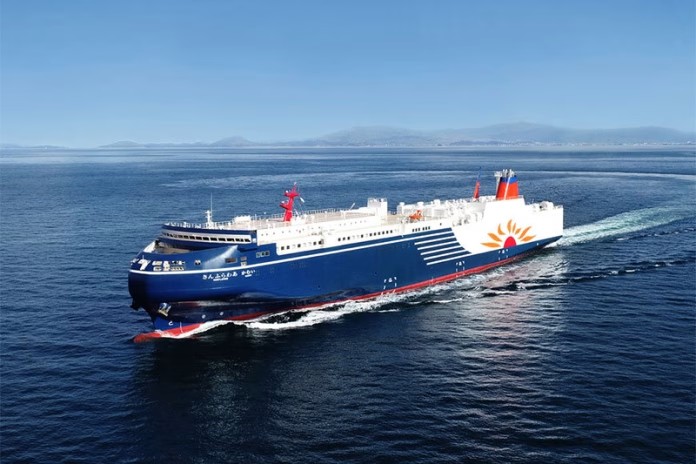
Sunflower Kamuy: A New Era in Maritime Travel.The maritime world saw a big change on January 21, 2025. The LNG-fueled ferry Sunflower Kamuy started its service. It now runs between Ibaraki and Hokkaido. Mitsui O.S.K. Lines (MOL) owns this special ship. MOL Sunflower Ltd. operates it.

Cutting-Edge Tech Cuts Emissions

The Sunflower Kamuy uses new tech to be greener:

  1. “Ishin” ship design: Uses wind to help move
  2. “Spray Tearing Plate”: Saves energy
  3. LNG engines: Cleaner than old ones

These new ideas help a lot. The ship makes 35% less CO2 than older ships. That’s a big step for cleaner sea travel.

Better Trips for Passengers

The new ferry isn’t just good for the earth. It’s great for people too:

  • More room for trucks
  • Comfy cabins for drivers
  • New gym and play areas
  • Sea-view bath and sauna
  • Rooms where pets can stay

These changes make trips more fun and comfy for everyone.

LNG Ships on the Rise

The Sunflower Kamuy isn’t alone. It’s part of a bigger change:

  • It’s MOL’s third LNG ferry
  • A fourth ship will join soon
  • More LNG stations are being built worldwide

This shows that LNG is becoming more popular for ships.

Looking to the Future

MOL has big plans. They want zero emissions by 2050. The Sunflower Kamuy is a step towards that goal. MOL is also looking at other new fuels. They want to lead the way in clean shipping.As more ships like this succeed, we might see:

  1. More money put into LNG
  2. New ship designs
  3. Stricter rules about pollution

Wrap-Up

The Sunflower Kamuy is a big deal. It shows how ships can be cleaner and better for passengers. It’s not just about one ship. It’s about changing how we travel by sea.

As ships get cleaner, sea travel will change. Companies like MOL are showing the way. They’re making travel better for people and the planet.

The success of ships like the Sunflower Kamuy could change everything. It could lead to cleaner fuels being used more. This would be great for the earth.

As the industry changes, ships will get cleaner and more efficient. The Sunflower Kamuy is just the start. It shows what’s possible when we combine new tech with care for the environment.

In the end, this isn’t just about one ship. It’s about a whole new way of thinking about sea travel. It’s about making choices that are good for business, good for passengers, and good for the planet.

The maritime world is changing fast. Ships like the Sunflower Kamuy are leading the way. They show us what’s possible when we dream big and work hard. The future of sea travel looks cleaner, greener, and more exciting than ever before.

Source: Mitsui O.S.K. Lines, Ltd.

Global Market Implications and Future Outlook

1
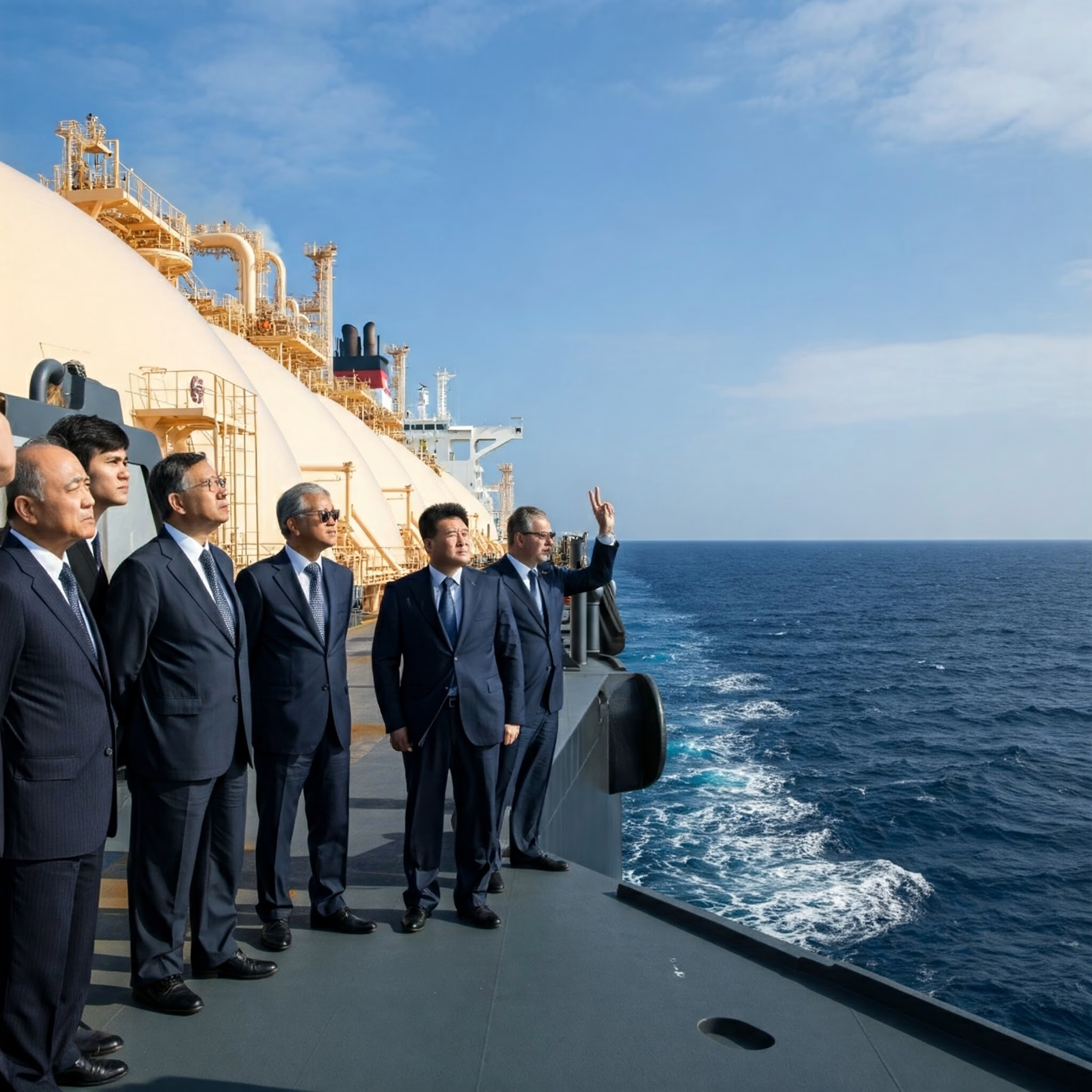
A group of people in suits standing on the deck of a large LNG-powered ship, looking out at the ocean.
This image shows a group of people in suits standing on the deck of a large LNG-powered ship, looking out at the ocean. The ship is white with a blue stripe and has a large LNG tank on its deck. The sky is blue and there are some white clouds in the background.

Global Market Implications and Future Outlook

Dive into the seismic shifts reshaping America’s LNG landscape: From policy reversals to global market dynamics, uncover the future of U.S. energy exports in our comprehensive analysis.

The expansion of U.S. LNG exports is set to have significant implications for global energy markets in 2025 and beyond. As the industry continues to grow, several key trends and factors will shape its future:

Expanding Export Capacity

U.S. LNG export capacity is projected to increase substantially in 2025. Exports are expected to rise by 15%, reaching 14 Bcf/d, as new facilities like Plaquemines LNG and Corpus Christi Stage 3 come online. This growth will further solidify the United States’ position as the world’s largest LNG exporter.

Shifting Market Dynamics

The global LNG market is poised for significant change in 2025 after two years of relatively limited growth. The next major wave of supply starts in 2025, with nearly 90% of the expected 27 million metric tons of new supply coming from North America. This surge in exports will likely reshape global trading patterns and potentially impact prices.

European Demand Fluctuations

Europe has been the primary destination for U.S. LNG exports, accounting for 55% of total exports in 2024. However, Europe’s LNG demand is expected to peak by 2025 and decline through 2030. This shift could prompt U.S. exporters to seek new markets, particularly in Asia.

Asian Market Focus

U.S. and other North American exporters are increasingly targeting Asian markets. Recent Sales and Purchase Agreements (SPAs) with Asian buyers indicate this trend. The strategic location of projects like Alaska LNG could strengthen the U.S. position in the Asian LNG market, particularly as demand grows in countries like China, Japan, and South Korea.

Price Dynamics and Competition

Global price dynamics will play a crucial role in determining U.S. LNG export volumes and destinations in 2025. Competition between U.S. and Asian buyers could intensify, potentially affecting flows to price-sensitive markets like Egypt, Brazil, India, and Bangladesh.

Environmental Considerations

The environmental impact of LNG exports remains a contentious issue. While proponents argue that increased U.S. LNG exports will reduce global carbon emissions by displacing coal, opponents claim the opposite. The industry will need to address these concerns, potentially through initiatives like carbon capture and storage technologies.

Geopolitical Implications

U.S. LNG exports have strategic implications beyond commercial considerations. They enhance global energy security, particularly for allies in Europe and Asia, and provide an alternative to traditional suppliers like Russia. However, the industry must navigate complex geopolitical landscapes, including potential policy shifts following the 2024 U.S. presidential election.

Long-term Projections and Challenges

Looking further ahead, U.S. LNG exports could potentially increase to 56.3 Bcf/d by 2050 under certain scenarios. However, this growth is not without challenges. Higher LNG export levels could lead to increased domestic natural gas prices, potentially rising by as much as 31% by 2050.As the U.S. LNG industry continues to evolve, it will need to balance domestic energy needs, environmental concerns, and international market dynamics. The coming years will be crucial in determining whether the United States can maintain its position as a leading global LNG exporter while addressing growing concerns about energy security and climate change.

Alaska LNG Project Developments

1
#image_title

Alaska LNG Project Developments

Dive into the seismic shifts reshaping America’s LNG landscape: From policy reversals to global market dynamics, uncover the future of U.S. energy exports in our comprehensive analysis.

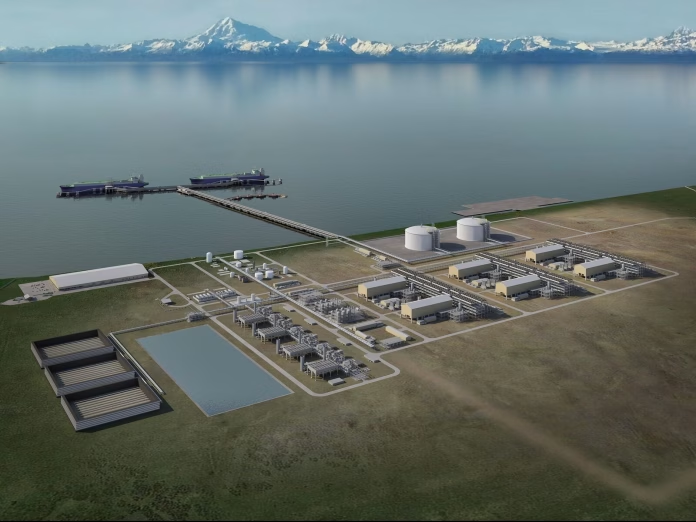
The Alaska LNG Project has gained significant momentum following recent policy shifts and agreements. This massive $44 billion infrastructure project aims to tap into Alaska’s vast natural gas resources and export them to global markets. Key components of the project include:

  1. An 800-mile pipeline from the North Slope to Southcentral Alaska
  2. A gas treatment plant on the North Slope
  3. A liquefaction facility in Nikiski for LNG export

Recent developments have breathed new life into this long-discussed project:

Framework Agreement with Glenfarne Group LLC

The Alaska Gasline Development Corporation (AGDC) has entered into an exclusive framework agreement with Glenfarne Group LLC to develop the Alaska LNG Project. This partnership marks a crucial step forward, bringing in private sector expertise and funding. Glenfarne Energy Transition, a subsidiary of Glenfarne Group, confirmed the agreement covers the entire project scope, including the pipeline, export facility, and carbon capture infrastructure.

Project Scope and Timeline

The Alaska LNG Project aims to export up to 20 million tonnes of LNG per year, with a potential start date in 2030 or 2031. This ambitious timeline reflects the renewed focus on accelerating the project’s development. The agreement with Glenfarne is expected to be finalized in the coming months, after which front-end engineering and design (FEED) work should commence.

Executive Order Support

President Trump’s recent executive order, “Unleashing Alaska’s Extraordinary Resource Potential,” has provided significant federal backing for the project. The order directs federal agencies to:

  1. Prioritize the development of Alaska’s LNG potential
  2. Expedite permitting for all necessary pipeline and export infrastructure related to the Alaska LNG Project
  3. Consider the economic and national security benefits associated with the project’s development

Environmental and Economic Considerations

The Alaska LNG Project presents a complex set of environmental and economic trade-offs that have sparked intense debate among policymakers, industry leaders, and environmental groups.

Environmental Impacts

The project would have significant environmental consequences:

  1. Permafrost and Wetlands: Construction would affect 35,474 acres of land, with 45% being permanently impacted. The project would result in significant long-term to permanent impacts on thaw-sensitive permafrost (about 6,377 acres), thaw-stable permafrost (about 3,415 acres), and convert about 4,162 acres of wetland to upland.
  2. Wildlife: The project could significantly affect caribou, particularly the Central Arctic Herds, due to the timing of impacts during sensitive periods, permanent impacts on sensitive habitats, and the project’s location at the center of the herds’ range.
  3. Marine Life: Increased vessel traffic in Cook Inlet could pose risks to endangered beluga whales, with the summer density of these whales in Knik Arm being more than 300 times greater than the density offshore of Nikiski.
  4. Air Quality and Noise: During construction, startup, and operational activities at the liquefaction facilities, as well as during flaring events, impacts on air quality could be significant. Operational noise at the two nearest noise-sensitive areas would likely double, which would be considered a significant increase.

Greenhouse Gas Emissions

The project’s impact on greenhouse gas emissions is a point of contention:

  1. Emissions Reduction Claim: The Alaska Gasline Development Corporation (AGDC) claims the project would reduce annual carbon dioxide equivalent emissions by 77 million metric tons compared to a representative Asian regional coal supply chain, a 50% reduction.
  2. Lifecycle Analysis: A Department of Energy study included a lifecycle analysis of greenhouse gas emissions associated with exporting LNG from the project to Asian markets.
  3. Environmental Groups’ Concerns: Critics argue that the project could emit as much as ten times more carbon into the air than the massive Willow Project and contribute over 2 billion tons of greenhouse gas emissions over its 30-year minimum lifespan.

Economic Benefits

Proponents highlight several economic advantages:

  1. Job Creation: The project is expected to generate thousands of jobs during construction and operation phases.
  2. Economic Boost: It could provide a significant boost to Alaska’s economy through increased tax revenues and economic activity.
  3. Energy Security: The project aligns with the goal of enhancing U.S. energy dominance and providing allies with a stable source of LNG.
  4. Global Market Position: With its strategic location, the project could strengthen the U.S. position in the Asian LNG market, particularly as demand grows in countries like China, Japan, and South Korea.

Balancing Act

The Alaska LNG Project exemplifies the challenge of balancing economic development with environmental protection. While it promises significant economic benefits and potential global emissions reductions by displacing coal, it also poses substantial risks to local ecosystems and could lock in fossil fuel infrastructure for decades to come. As the global energy landscape evolves towards renewables, the long-term viability and necessity of such large-scale LNG projects remain subjects of ongoing debate and scrutiny.

Impact on Pending LNG Projects

1
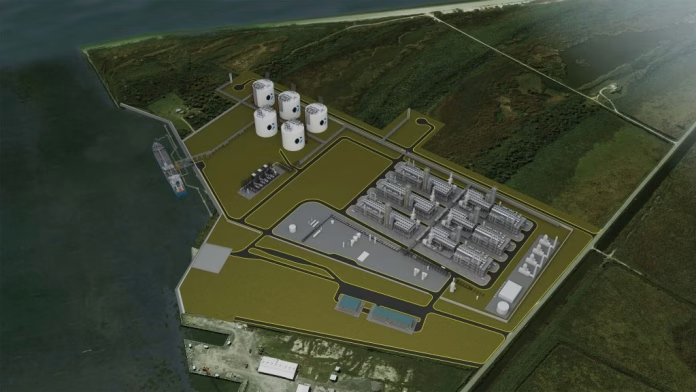
Commonwealth LNG in Louisiana
#image_title

Impact on Pending LNG Projects

Dive into the seismic shifts reshaping America’s LNG landscape: From policy reversals to global market dynamics, uncover the future of U.S. energy exports in our comprehensive analysis.

The lifting of the moratorium on LNG export permits is expected to have immediate effects on several high-profile projects that had been in regulatory limbo. President Trump’s executive order directs the Department of Energy to resume processing export permit applications for new liquefied natural gas projects, effectively reversing the pause implemented by the Biden administration in early 2024.

Some of the notable projects awaiting approvals include:

  1. Commonwealth LNG in Louisiana
  2. Venture Global’s CP2 project in Louisiana
  3. Cheniere Energy’s expansion of its Sabine Pass facility in Louisiana
  4. Energy Transfer’s Lake Charles terminal in Louisiana
  5. The second phase of Sempra’s Port Arthur LNG project in Texas

These projects, among others, can now proceed with their applications, potentially accelerating the growth of U.S. LNG export capacity. The U.S. LNG industry had already set export records in 2023, establishing the country as the world’s largest exporter of LNG. With the resumption of permit processing, exports are projected to double by the end of the decade and could potentially double again under existing authorizations.

The impact of this policy shift extends beyond just these projects. The renewed focus on LNG exports is expected to:

  1. Boost the U.S. economy through job creation and increased GDP
  2. Enhance global energy security, particularly for allies in Europe and Asia
  3. Potentially reduce global greenhouse gas emissions by displacing coal in some markets

However, environmental groups and some policymakers express concerns about:

  1. Increased methane emissions from expanded natural gas production and transportation
  2. The long-term commitment to fossil fuel infrastructure in the face of climate change
  3. Potential impacts on local ecosystems and communities near LNG facilities

The resumption of permit processing is likely to intensify competition in global energy markets. U.S. LNG exports could position the country as a key supplier to Europe and Asia, particularly as these regions seek alternatives to Russian energy. This shift could have significant geopolitical implications, potentially altering energy relationships and trade dynamics on a global scale.

It’s worth noting that while the executive order paves the way for these projects to move forward, they still face other hurdles, including securing financing, completing environmental reviews, and navigating potential legal challenges from environmental groups. The coming months will be crucial in determining how quickly these projects can progress and what their ultimate impact will be on the U.S. energy landscape and global LNG markets.

Trump’s Executive Order Reverses Biden-Era Moratorium

0
Trump's Executive Order Reverses Biden-Era Moratorium
#image_title

Trump’s Executive Order Reverses Biden-Era Moratorium

Dive into the seismic shifts reshaping America’s LNG landscape: From policy reversals to global market dynamics, uncover the future of U.S. energy exports in our comprehensive analysis.

On January 21, 2025, President Donald Trump issued a sweeping executive order that dramatically shifted the landscape of U.S. energy policy, effectively reversing the moratorium on new liquefied natural gas (LNG) export permits implemented by the Biden administration in early 2024. This decisive action marks a significant turning point in the nation’s approach to energy exports, with far-reaching implications for the LNG industry, global energy markets, and environmental policy.The executive order contains several key provisions that aim to revitalize the U.S. LNG export sector:

  1. Immediate Resumption of Permit Processing: The order mandates the immediate restart of processing permits for LNG export projects, ending the pause that had created uncertainty for numerous developments in the pipeline.
  2. Expedited Application Reviews: The Department of Energy (DOE) has been instructed to accelerate the review process for LNG export applications, potentially shortening the timeline for project approvals.
  3. Prioritization of Alaska’s LNG Potential: The order places special emphasis on unleashing Alaska’s LNG capabilities, including the development of related infrastructure.

This policy reversal comes in the wake of the Biden administration’s decision to pause new LNG export permits, which was implemented to allow U.S. national laboratories to conduct comprehensive studies on the environmental and economic effects of the rapidly growing export industry. The pause had created a cloud of uncertainty over numerous projects in development, many of which were aimed at supplying the burgeoning Asian and European markets.The Trump administration’s move is likely to be welcomed by the U.S. LNG industry, which had already set export records in 2023, establishing the country as the world’s largest exporter of LNG. With the resumption of permit processing, industry analysts project that exports could potentially double by the end of the decade and potentially double again under existing authorizations.However, the executive order has also reignited the debate over the balance between energy development and environmental protection. Proponents argue that increased LNG exports will boost the U.S. economy through job creation and increased GDP, while also enhancing global energy security, particularly for allies in Europe and Asia. Critics, on the other hand, express concerns about increased methane emissions, the long-term commitment to fossil fuel infrastructure in the face of climate change, and potential impacts on local ecosystems and communities near LNG facilities.As the industry gears up for a potential boom in LNG exports, stakeholders across the spectrum – from energy companies to environmental groups, policymakers to local communities – are bracing for the wide-ranging impacts of this significant policy shift. The coming months and years will likely see intense activity in the LNG sector, as well as continued debate over the role of natural gas in the global energy transition.

Editorial: Trump Reverses Biden’s LNG Export Ban

5
Trump Reverses Biden's LNG Export Ban
#image_title

Editorial: Trump Reverses Biden’s LNG Export Ban: Key Developments in U.S. LNG Policy

Part 1. Trump’s Executive Order Reverses Biden-Era Moratorium

On January 21, 2025, President Donald Trump issued a sweeping executive order that effectively reversed the moratorium on new liquefied natural gas (LNG) export permits implemented by the Biden administration in early 2024. This decisive action marks a significant shift in U.S. energy policy, with far-reaching implications for the LNG industry, global energy markets, and environmental policy.The executive order contains several key provisions:

  1. Immediate resumption of permit processing for LNG export projects
  2. Instructions for the Department of Energy (DOE) to expedite application reviews
  3. Prioritization of Alaska’s LNG potential, including related infrastructure
This policy reversal comes after the Biden administration had paused new LNG export permits to allow U.S. national laboratories to study the environmental and economic effects of the rapidly growing export industry. The pause had created uncertainty for numerous projects in development, many of which were aimed at supplying Asian and European markets.

Part 2: Impact on Pending LNG Projects

The lifting of the moratorium is expected to have immediate effects on several high-profile LNG projects that had been in regulatory limbo. Some of the notable projects awaiting approvals include:

  1. Commonwealth LNG in Louisiana
  2. Venture Global’s CP2 project in Louisiana
  3. Cheniere Energy’s expansion of its Sabine Pass facility in Louisiana
  4. Energy Transfer’s Lake Charles terminal in Louisiana
  5. The second phase of Sempra’s Port Arthur LNG project in Texas

These projects, among others, can now proceed with their applications, potentially accelerating the growth of U.S. LNG export capacity. The U.S. LNG industry had already set export records in 2023, establishing the country as the world’s largest exporter of LNG. With the resumption of permit processing, exports are projected to double by the end of the decade and could potentially double again under existing authorization.

Read more about: Impact on Pending LNG Projects

Part 3: Alaska LNG Project Developments

The executive order places special emphasis on unleashing Alaska’s LNG potential, marking a significant boost for the long-discussed Alaska LNG Project. This massive $44 billion infrastructure project involves:

  1. An 800-mile pipeline from the North Slope to Southcentral Alaska
  2. A gas treatment plant on the North Slope
  3. A liquefaction facility in Nikiski for LNG export

Recent developments indicate progress on this front:

  • The Alaska Gasline Development Corporation (AGDC) announced a framework agreement with Glenfarne Group LLC to develop the Alaska LNG Project.
  • The project aims to export up to 20 million tonnes of LNG per year, with a potential start date in 2030 or 2031
  • The Trump administration’s prioritization of Alaska’s LNG potential is expected to expedite permitting and leasing processes for energy projects in the state.

Environmental and Economic Considerations

The policy shift raises important questions about the balance between energy development and environmental protection. Proponents argue that increased LNG exports will:

  1. Boost the U.S. economy through job creation and increased GDP
  2. Enhance global energy security, particularly for allies in Europe and Asia
  3. Potentially reduce global greenhouse gas emissions by displacing coal in some markets
However, environmental groups and some policymakers express concerns about:
  1. Increased methane emissions from expanded natural gas production and transportation
  2. The long-term commitment to fossil fuel infrastructure in the face of climate change
  3. Potential impacts on local ecosystems and communities near LNG facilities

A study released by the Department of Energy in December 2024 presented a mixed outlook for increased LNG exports, forecasting potential increases in domestic energy prices and a modest increase in global emissions. This study is likely to inform ongoing debates about the costs and benefits of expanded LNG exports.

Read more about: Alaska LNG Project Developments

Part 4: Global Market Implications and Future Outlook

The resumption of U.S. LNG export permit processing is expected to have significant implications for global energy markets:

  1. Increased competition in the global LNG market, potentially putting downward pressure on prices
  2. Strengthened energy ties between the U.S. and key allies in Europe and Asia
  3. Potential shifts in global energy geopolitics, particularly in relation to other major LNG exporters like Qatar and Australia

Looking ahead, several factors will shape the future of U.S. LNG exports:

  1. Global demand trends, particularly in key markets like China, Japan, and South Korea
  2. The pace of renewable energy adoption and decarbonization efforts worldwide
  3. Potential legal challenges to the new policy from environmental groups
  4. The outcome of the 2028 U.S. presidential election, which could lead to further policy shifts

As the U.S. moves to expand its LNG export capacity, the industry will need to navigate evolving market conditions, technological advancements, and ongoing debates about energy security and climate change. The coming years will be crucial in determining whether the U.S. can maintain its position as a leading global LNG exporter while also addressing growing concerns about environmental sustainability.

Read more about: Global Market Implications and Future Outlook
Trump Sparks US LNG Boom

0
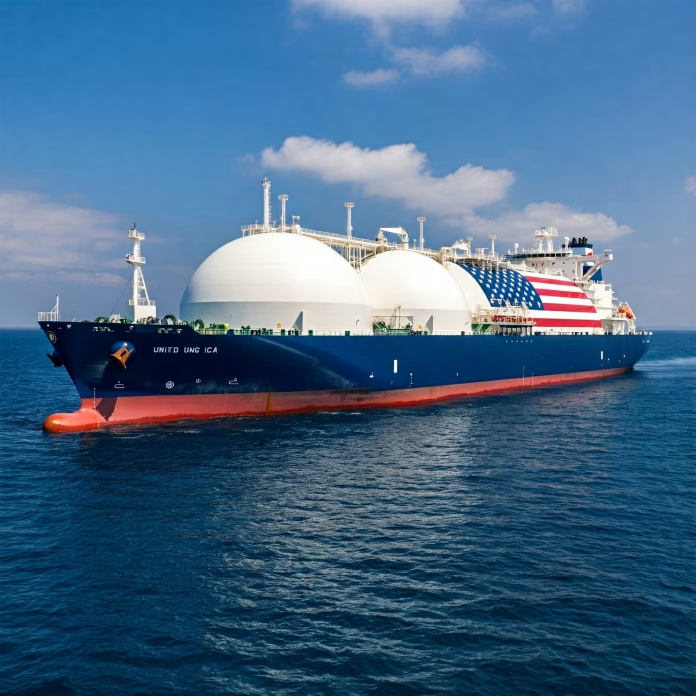
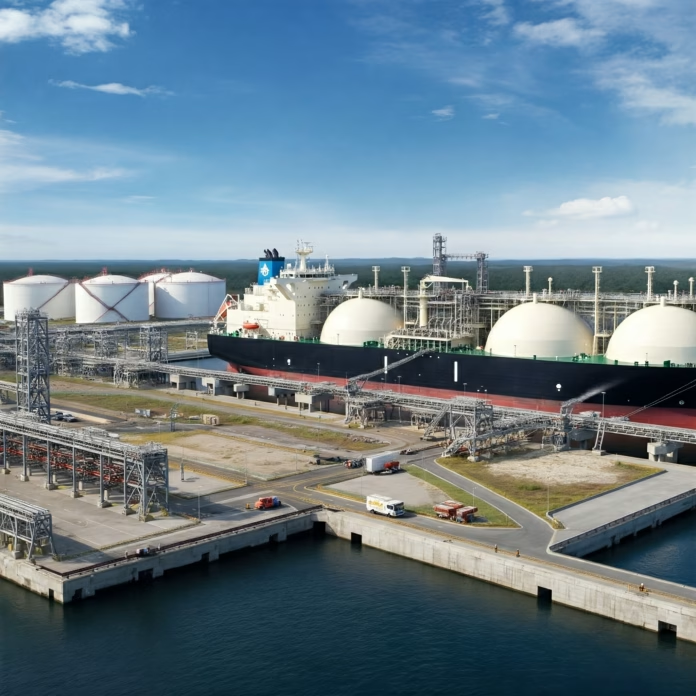
A large LNG tanker ship docked at a modern export terminal. The ship's distinctive spherical tanks are visible in the foreground, with the terminal's storage tanks and loading arms in the background.
AI Gen : Powering the world: A glimpse into the global energy trade at a modern LNG export facility.

Trump Sparks US LNG Boom : Export Permit Freeze Lifted

Former President Donald Trump’s executive order to restart LNG export permit processing marks a seismic shift in U.S. energy policy, promising to reshape the global natural gas market and reignite debates on energy security versus environmental concerns.

Key Developments in U.S. LNG Policy

Trump’s executive order, issued on January 21, 2025, effectively reverses the moratorium implemented by the Biden administration in early 2024. This decision has far-reaching implications for the LNG industry, global energy markets, and environmental policy.

Key points of the executive order include:

  • Immediate resumption of permit processing for LNG export projects
  • Instructions for the Department of Energy to expedite application reviews
  • Prioritization of Alaska’s LNG potential, including related infrastructure

Impact on Major LNG Projects

The order breathes new life into several significant LNG projects that had been in limbo:

  • Commonwealth LNG (Louisiana)
  • Venture Global’s CP2 project (Louisiana)
  • Cheniere Energy’s Sabine Pass expansion (Louisiana)
  • Energy Transfer’s Lake Charles terminal (Louisiana)
  • Sempra’s Port Arthur LNG project, second phase (Texas)

These projects, collectively, could add nearly 100 million metric tons per annum (MTPA) of LNG capacity by 2031, further solidifying the United States’ position as the world’s leading LNG exporter.

Economic and Market Implications

The resumption of LNG export permits is expected to have significant economic impacts:

  • Export Growth: U.S. LNG exports are projected to double by the end of the decade.
  • Economic Benefits: Increased LNG exports could potentially boost U.S. GDP by $80 billion in 2050.
  • Domestic Price Concerns: Studies suggest unconstrained LNG exports might lead to a 31% increase in domestic gas prices by 2050.

Geopolitical Considerations

Trump’s decision carries substantial geopolitical weight:

  • Energy Security: U.S. LNG exports are viewed as crucial for stabilizing global natural gas markets, especially in light of geopolitical events like the Russia-Ukraine conflict.
  • European Reliance: Europe’s increasing dependence on U.S. LNG following Russia’s invasion of Ukraine makes this policy shift particularly significant for transatlantic energy relations.

Environmental and Climate Concerns

The executive order has reignited debates about the environmental impact of LNG exports:

  • Emissions Impact: Environmental groups argue that increased LNG exports will accelerate climate change and potentially displace renewable energy sources globally.
  • Community Concerns: There are worries about increased pollution and health risks for communities near LNG facilities, particularly in the Gulf Coast region.

Industry Response and Future Outlook

The LNG industry has welcomed Trump’s decision, with many companies expressing intentions to rapidly advance their projects. However, several challenges and uncertainties remain:

  • Legal Challenges: Environmental groups are likely to mount legal challenges against new LNG export approvals.
  • Regulatory Hurdles: Projects will still need to navigate other regulatory processes, including approvals from the Federal Energy Regulatory Commission (FERC).
  • Market Dynamics: Global LNG supply growth and demand fluctuations will influence the viability of new projects.
  • Political Uncertainty: Future administrations could potentially reverse or modify these policies, creating long-term uncertainty for the industry.

Conclusion

Trump’s executive order represents a pivotal moment in U.S. energy policy, promising to boost LNG exports and strengthen America’s position in the global energy market. However, it also intensifies the ongoing debate between economic growth, energy security, and environmental protection. As the U.S. navigates this complex landscape, the coming years will likely see intense discussions, potential legal battles, and significant shifts in the global LNG industry.

FLNG Gimi Receives First Gas

0
FLNG Gimi Receives First Gas

FLNG Gimi Receives First Gas: African LNG Milestone

Introduction

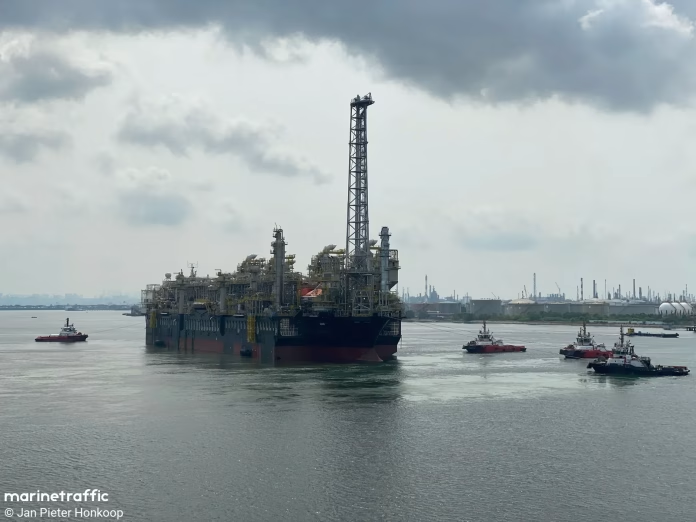
FLNG Gimi has officially reached a groundbreaking milestone for the maritime and LNG industries by receiving its first gas feed on January 18, 2025, from bp’s Greater Tortue Ahmeyim (“GTA”) project. This event signifies the beginning of full commissioning activities for FLNG Gimi, paving the way for the first LNG export cargo anticipated in Q1 2025, and new possibilities for LNG production offshore Mauritania and Senegal.

1. Key Facts and Figures

  • Gas Intake Date: January 18, 2025
  • Location: Offshore Mauritania and Senegal
  • Operator: bp’s FPSO on the GTA project
  • First LNG Export Cargo: Expected in Q1 2025
  • Full Commercial Operation: Targeted for Q2 2025
  • Contract Value: 20-year Lease and Operate Agreement, unlocking around $3 billion of Adjusted EBITDA Backlog (Golar’s share)

Prior to receiving natural gas directly from the FPSO, FLNG Gimi relied on the LNG carrier British Sponsor for advanced commissioning work. With the new feed source in place, commissioning efforts can now ramp up to operational levels.

2. Expert Insights

Industry analysts have noted that FLNG Gimi’s venture represents one of the largest offshore LNG opportunities in recent years, offering new avenues for energy security and market flexibility.

3. Impact on the LNG and Maritime Sector

  • Offshore LNG Growth: The successful start-up at GTA demonstrates the growing viability of offshore liquefaction, reducing the need for extensive onshore infrastructure.
  • Reduced Environmental Footprint: FLNG projects often present lower onshore environmental impacts compared to land-based LNG plants.
  • Regulatory and Operational Synergies: Collaboration between Golar, bp, and host governments could streamline future offshore LNG endeavors, setting precedents for standardized regulations and permitting processes.

This wide-ranging collaboration also signifies a turning point for the African maritime industry, positioning Mauritania and Senegal as emerging players in global LNG exports.

4. Potential Future Implications

  • Long-Term Revenue Streams: Triggering the 20-year Lease and Operate Agreement allows Golar to recognize significant contractual payments, bolstering investment in further LNG technology.
  • Global LNG Market Influence: As more FLNG projects come online, market dynamics may shift, with flexible, quicker-to-deploy floating facilities challenging the dominance of established onshore terminals.
  • Further Technological Advancements: The continued success of FLNG operations could encourage R&D that reduces operational costs, enhances efficiency, and broadens adoption of similar projects worldwide.

Conclusion

FLNG Gimi’s first gas intake not only signals the start of commercial commissioning but also represents a major leap forward in offshore LNG innovation. FLNG Gimi is poised to reshape global LNG strategies by offering efficient production capabilities and substantial, long-term commercial gains. With the first export cargo expected by Q1 2025 and a projected COD in Q2 2025, the stage is set for a transformative new era of floating LNG production.

Alaska LNG Project Gets Trump Boost

0
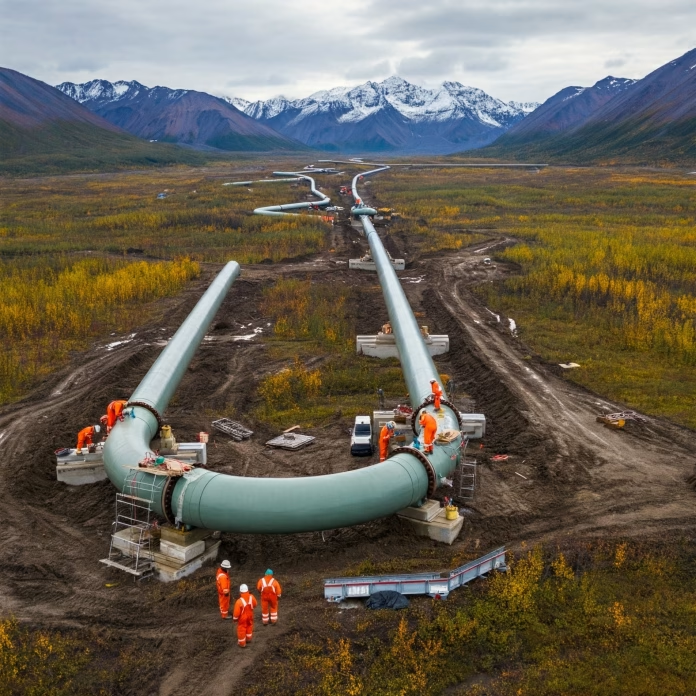
A large natural gas pipeline being constructed through a snowy Alaskan landscape.
#image_title

Alaska LNG Project Gets Trump Boost : ‘Critical’ for US Economy and Security

Former President Donald Trump has thrown his support behind the Alaska LNG Project, a massive natural gas pipeline and export facility that could significantly reshape the energy landscape in the United States and across the Pacific.  

Trump’s backing came in the form of an executive order issued on his first day back in office. The order designates the Alaska LNG Project as being of “critical national importance” and mandates that federal agencies prioritize its development.    

The executive order cites both economic and national security benefits associated with the project. Alaska LNG is expected to create thousands of jobs and generate billions of dollars in revenue for the state. Additionally, it will position the US as a major LNG exporter in the Pacific region, supplying key allies and reducing reliance on less stable sources of natural gas.    

What is the Alaska LNG Project?

The Alaska LNG Project is a proposed 800-mile pipeline that would transport natural gas from the North Slope of Alaska to a liquefaction plant in Nikiski. The liquefied natural gas (LNG) would then be exported to markets in Asia and other parts of the world.  

The project has been in development for several years and has received bipartisan support. It is expected to be completed sometime in the next decade.   

Why is Trump Supporting the Project?

Trump’s support for the project is likely motivated by several factors. First, the project is expected to create jobs and boost the Alaskan economy. Second, the project will help to secure America’s energy independence and reduce reliance on foreign oil and gas. Finally, the project will position the US as a major LNG exporter, which will help to reduce the trade deficit and strengthen the US dollar.   

What are the Potential Benefits of the Project?

The Alaska LNG Project has the potential to provide a number of benefits to the United States, including:

  • Job creation: The project is expected to create thousands of jobs during construction and operation.   
  • Economic growth: The project is expected to generate billions of dollars in revenue for the state of Alaska.   

  • Energy independence: The project will help to secure America’s energy independence and reduce reliance on foreign oil and gas.
  • Trade deficit reduction: The project will position the US as a major LNG exporter, which will help to reduce the trade deficit.    
  • Strengthened US dollar: The project will help to strengthen the US dollar by increasing demand for US exports.   

What are the Potential Challenges of the Project?

The Alaska LNG Project also faces a number of challenges, including:

  • Environmental concerns: The project could have a negative impact on the environment, including greenhouse gas emissions and habitat destruction.
  • Cost: The project is estimated to cost tens of billions of dollars.
  • Permitting: The project requires a number of permits from federal and state agencies.
  • Community opposition: Some communities in Alaska are opposed to the project.

What is the Future of the Project?

Despite the challenges, the Alaska LNG Project is still moving forward. Trump’s executive order is a major boost for the project and increases the likelihood that it will be completed. However, it remains to be seen whether the project can overcome all of the challenges it faces.

SEFE and Höegh Evi Join Forces

0
SEFE and Höegh Evi Join Forces
#image_title

SEFE and Höegh Evi Join Forces to Develop International Clean Hydrogen Supply Chains

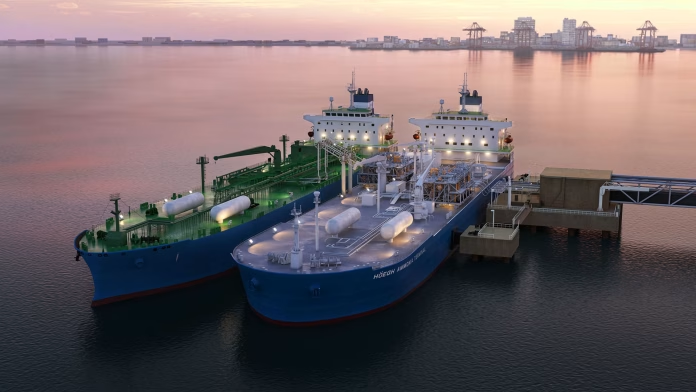
SEFE Securing Energy for Europe and marine infrastructure provider Höegh Evi have announced a strategic partnership to jointly develop international supply chains for clean hydrogen to be delivered to Germany and other locations in Europe.

This collaboration aims to establish a robust infrastructure for the transportation and import of clean hydrogen, primarily in the form of ammonia. By combining SEFE’s expertise in securing clean hydrogen supply and its strong customer base in Germany and Europe with Höegh Evi’s innovative floating terminal solutions, the partnership seeks to accelerate the energy transition and decarbonization efforts.

Key aspects of the partnership include:

  • Sourcing and Supply: SEFE will be responsible for securing the supply of clean hydrogen, including sourcing ammonia globally and aggregating hydrogen demand in Germany and Europe.
  • Transportation and Import: Höegh Evi will provide the necessary infrastructure for the transportation of ammonia by ship and the operation of floating import terminals. These terminals will be equipped with advanced technology to convert ammonia back into hydrogen.
  • Delivery and Distribution: SEFE will ensure the delivery of clean hydrogen to its customers through the German hydrogen core grid, which is being developed by its subsidiary GASCADE.

By joining forces, SEFE and Höegh Evi are taking significant steps towards creating a sustainable and reliable supply chain for clean hydrogen, contributing to a greener future for Europe.

About SEFE

SEFE Securing Energy for Europe is a leading energy company committed to securing a sustainable energy future for Europe. With a strong focus on clean hydrogen, SEFE is actively involved in developing and implementing innovative solutions to accelerate the energy transition.

About Höegh Evi

Höegh Evi is a global leader in marine infrastructure, providing innovative solutions for the transportation and storage of energy resources. The company’s expertise in floating terminals and advanced technologies enables the efficient and sustainable delivery of clean energy to global markets.