Home Blog

US Approves Commonwealth LNG Export Terminal

0
US Approves Commonwealth LNG

Commonwealth LNG Secures Conditional U.S. Approval for Louisiana Export Terminal

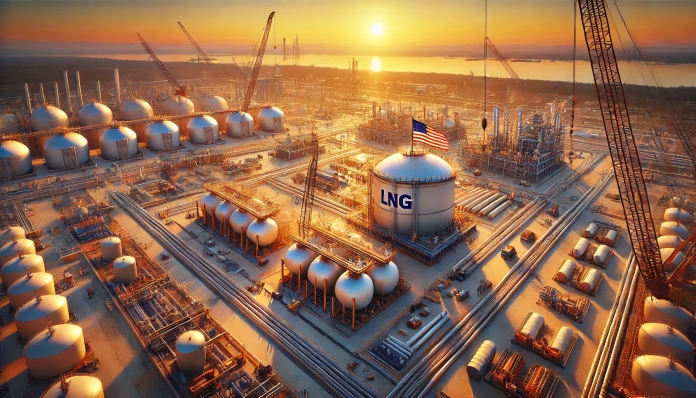
The U.S. Department of Energy (DOE) and Federal Energy Regulatory Commission (FERC) have granted critical regulatory approvals to Commonwealth LNG, advancing the development of its proposed 9.5 million metric tons per annum (mtpa) liquefied natural gas (LNG) export terminal in Cameron Parish, Louisiana. These milestones—a conditional non-free trade agreement (non-FTA) export authorization from the DOE and a draft Supplemental Environmental Impact Statement (SEIS) from FERC—position the project for a final investment decision (FID) in September 2025, with first LNG production targeted for early 2029. The approvals mark the Trump administration’s first major LNG export authorization since reversing the Biden-era pause on new permits, signaling a renewed focus on expanding U.S. energy dominance.

Regulatory Milestones and Project Timeline

Conditional DOE Authorization for Non-FTA Exports

The DOE’s conditional approval, issued on February 14, 2025, allows Commonwealth LNG to export LNG to non-FTA countries, including key Asian and European markets such as Japan, Germany, and India. In its order, the DOE concluded that the project would likely yield economic benefits to the U.S., diversify global LNG supplies, and enhance energy security for allies through 2050. This decision directly counters the Biden administration’s 2024 moratorium, which had paused new LNG export permits to assess climate and economic impacts. Secretary of Energy Chris Wright emphasized that resuming approvals aligns with President Trump’s agenda to “unleash American energy dominance” and reinforce the U.S. as a reliable global supplier.

FERC’s Draft Supplemental Environmental Review

Concurrently, FERC released a draft SEIS addressing a July 2024 court ruling that found the agency had inadequately assessed cumulative nitrogen dioxide (NO2) emissions from the project. The draft report acknowledges potential exceedances of National Ambient Air Quality Standards during peak construction but deems them manageable through mitigation measures. A public comment period on the SEIS remains open until April 7, 2025, with a final FERC order anticipated in July 2025. Commonwealth CEO Farhad Ahrabi highlighted that resolving these regulatory hurdles paves the way for a September 2025 FID and operational start by Q1 2029.

Reversal of Biden-Era LNG Permit Pause

The approvals follow President Trump’s January 20, 2025, executive order lifting the Biden administration’s freeze on LNG export authorizations. While the DOE extended the comment period for Biden’s climate impact study to March 20, 2025, the agency dismissed its findings that increased exports could raise domestic prices and emissions. This policy shift reflects the administration’s prioritization of energy sector growth over environmental concerns, with Wright pledging further actions to streamline LNG permitting.

Economic and Strategic Implications

Investment and Job Creation

Commonwealth LNG is projected to unlock approximately $11 billion in capital investments in Louisiana, including $3.5 billion in annual export revenue once operational. The project will employ up to 2,000 workers during peak construction and create 270 permanent high-paying jobs, bolstering local economies in Cameron Parish. Kimmeridge Energy Management, Commonwealth’s majority owner, has committed development capital to advance the terminal through FID and early construction phases.

Enhancing U.S. Energy Diplomacy

The DOE emphasized Commonwealth’s role in strengthening energy security for U.S. allies, particularly in Europe and Asia, where demand for stable LNG supplies has surged following geopolitical disruptions. By leveraging Louisiana’s proximity to Gulf Coast shale basins, the terminal aims to deliver low-cost, low-emission LNG through an integrated “wellhead-to-water” strategy, linking upstream gas production directly to export infrastructure. Ben Dell, Kimmeridge’s Managing Partner, noted the project aligns with the Trump administration’s vision for “responsible energy diplomacy”.

Competitive Positioning in Global Markets

With a planned capacity of 1.2 billion cubic feet per day (Bcf/d), Commonwealth LNG will join a wave of U.S. export projects expected to expand total national capacity to 24.4 Bcf/d by 2028. The facility’s modular construction approach—designed in partnership with Technip Energies—aims to reduce costs and accelerate timelines, addressing historical challenges in LNG project execution. However, analysts caution that softening Asian demand and rising competition from Qatar and Australia could pressure long-term contract pricing.

Environmental and Community Considerations

Emissions Mitigation and Climate Concerns

While FERC’s draft SEIS identifies potential NO2 exceedances, Commonwealth has committed to employing advanced emissions control technologies and monitoring systems to comply with federal standards. The project’s emphasis on “low-emission gas” aligns with industry trends toward carbon-neutral LNG, though environmental groups argue the approvals contradict U.S. climate goals. The DOE’s dismissal of Biden’s emissions study underscores ongoing tensions between energy expansion and environmental regulation.

Community Benefits and Infrastructure Development

Kimmeridge has pledged to channel project revenues into local healthcare, education, and infrastructure improvements, including upgrades to the Calcasieu Ship Channel. A 4.8-kilometer pipeline will connect the terminal to existing gas networks, minimizing land disruption. Despite these commitments, some residents remain skeptical about long-term environmental and economic impacts, particularly given Cameron Parish’s vulnerability to hurricanes and industrial pollution.

Industry Reactions and Future Outlook

Market Reception and Investor Confidence

The approvals have injected optimism into U.S. LNG markets, with Commonwealth securing preliminary offtake agreements from Asian utilities. However, the project’s success hinges on finalizing long-term contracts amid volatile global prices. CEO Ahrabi’s target of Q1 2029 operations assumes no further legal delays, though pending court challenges and regulatory reviews pose risks.

Strategic Recommendations for Stakeholders

  1. Accelerate Partner Engagement: Commonwealth must secure binding customer commitments ahead of the September 2025 FID to mitigate financing risks.

  2. Strengthen Community Relations: Proactive outreach to Cameron Parish residents and transparent environmental reporting will be critical to maintaining social license.

  3. Monitor Policy Shifts: Developers should prepare for potential regulatory changes post-2024 elections, particularly if climate-focused administrations regain power.

Conclusion

The conditional approvals for Commonwealth LNG represent a watershed moment for U.S. energy policy, underscoring the Trump administration’s commitment to deregulation and export growth. By aligning project timelines with global demand cycles and addressing environmental concerns through technological innovation, Commonwealth aims to establish itself as a cost-competitive supplier in the Atlantic Basin. However, the project’s long-term viability will depend on navigating evolving market dynamics, regulatory landscapes, and community expectations. As Secretary Wright affirmed, restoring “regular order” to LNG permitting marks just the beginning of a broader strategy to cement U.S. leadership in the global energy transition.


Source: Commonwealth LNG
Kosmos Energy LNG production in Africa

0
FLNG Gimi Receives First Gas

Kosmos Energy’s GTA Project: Transforming Africa’s LNG Production Landscape Through Cross-Border Innovation

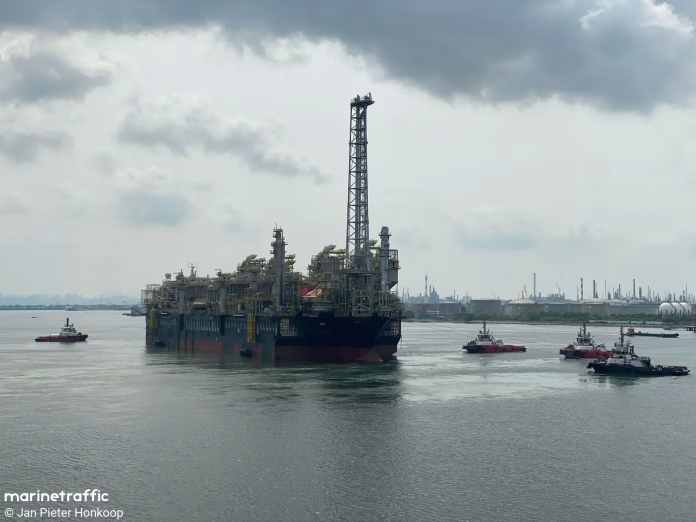
In a groundbreaking development that marks a new chapter in African energy production, Kosmos Energy and bp achieved first gas at the Greater Tortue Ahmeyim (GTA) project on the final day of 2024. This milestone represents more than just another LNG facility—it’s a testament to unprecedented cross-border cooperation between Mauritania and Senegal.

Operating in ultra-deepwater conditions reaching depths of 2,850 meters, the GTA project stands as a marvel of modern engineering and diplomatic achievement. With an annual production capacity of 2.3 million tonnes of LNG, this development is reshaping West Africa’s role in global energy markets while setting new standards for regional cooperation.

Introduction to the Greater Tortue Ahmeyim LNG Project

First gas at GTA was achieved by Kosmos Energy and bp on December 31, 2024. The offshore development, located between Mauritania and Senegal, will produce 2.3 million tonnes of LNG annually. Operating in water depths up to 2,850 meters, the project ranks among Africa’s export facilities. Both Mauritanian and Senegalian governments designated GTA as a project of strategic national importance in 2021.

Technical Details and Infrastructure of the GTA Project

Phase 1 of the project includes four gas production wells in ultra-deepwater conditions. The FPSO vessel, stationed 40 kilometers offshore, processes 500 million cubic feet of gas daily. A 35-kilometer pipeline system connects to the Floating LNG vessel “Gimi,” which has a LNG market outlook capacity of 2.5 million tonnes per annum. The project taps into estimated gas resources of 15 trillion cubic feet.

Economic Impacts on Mauritania and Senegal

The GTA project created over 3,000 local jobs during construction and partnered with 300 companies across both nations. A revenue sharing agreement splits proceeds equally between Mauritania and Senegal. The project includes a social investment program and a four-year apprentice training initiative for workforce development. Local communities benefit from the allocation of gas for domestic consumption, while the project strengthens both countries’ positions in global energy markets.

West Africa’s Emergence as an LNG Export Hub

The Greater Tortue Ahmeyim project marks Mauritania and Senegal’s entry into LNG exports. The development opens a new gas basin in the region, with plans for Phase 2 expected to add 3 million tonnes per annum to production capacity. The project strengthens West Africa’s position in global energy markets, as both countries join nimble export facilities like Nigeria and Angola. Additional gas discoveries in the area point to further growth potential.

Global LNG Supply and Demand Dynamics

The Greater Tortue Ahmeyim project adds substantial LNG capacity to international markets, with first cargo expected in Q1 2025. The development’s 2.3 million tonnes annual production strengthens Africa’s position in sharing insights elevates impact supply chains. The project’s 20-year operational timeline indicates long-term stability for international buyers seeking diversified supply sources. This development comes as African LNG exports gain prominence in meeting worldwide natural gas demand.

Environmental Considerations of the LNG Project

The GTA project incorporates environmental safeguards through its gas processing systems. The FPSO vessel removes heavier hydrocarbon components, water, and impurities from extracted gas. This processing meets international environmental standards while preparing the gas for liquefaction. The phased development approach allows for environmental monitoring and adaptation of protection measures based on operational data. The project’s offshore location reduces impact on coastal ecosystems while maintaining efficient production methods.

Kosmos Energy’s Financial Outlook and Growth Strategy

The Greater Tortue Ahmeyim project supports Kosmos Energy’s target of 90,000 barrels of oil equivalent per day production. The company focuses on generating free cash flow while reducing financial leverage to less than 1.5x. Revenue recognition from first gas at GTA begins with the first LNG cargo shipment in Q1 2025. The development strengthens the company’s position in African energy markets as West Africa expands its LNG export capabilities.

Challenges Faced and Overcoming Development Hurdles

The GTA project faced significant technical hurdles operating in waters up to 2,850 meters deep. The cross-border nature of the development required careful coordination between Mauritanian and Senegalian authorities, leading to a formal cooperation agreement in 2018. The construction and transportation of massive FPSO and FLNG vessels presented logistical complications, requiring specialized equipment and expertise. Teams overcame these obstacles through inter-governmental collaboration and advanced offshore engineering solutions.

Future Projections for LNG Demand and Discoveries

The Greater Tortue Ahmeyim project demonstrates potential for expansion beyond 10 million tonnes per annum in subsequent phases. Recent drilling at Greater Tortue Ahmeyim-1 in 2019 identified additional gas reserves, pointing to sustained production growth. The announced Phase 2 development will increase capacity by 3 million tonnes annually. This growth aligns with LNG market outlook demands, as African gas exports meet international energy requirements. The project’s success sets a precedent for future offshore developments in Mauritania and Senegal’s shared waters.

Local Market Dynamics and Job Creation

The Greater Tortue Ahmeyim project allocated gas for domestic use in Mauritania and Senegal, supporting local energy needs. The development brought 3,000 construction jobs and partnerships with 300 regional companies. The four-year apprentice program builds technical skills among local workers, creating sustained employment opportunities. Project managers worked with community leaders to identify priority areas for skills training, focusing on LNG operations, maintenance, and safety protocols.

Energy Security and Geopolitical Implications

The Greater Tortue Ahmeyim project strengthens Mauritania and Senegal’s energy independence while adding diversity to global LNG supply chains. The development positions West Africa as a key LNG production center, joining established amid gas scramble exporters like Nigeria and Angola. This shift in regional energy dynamics creates new trade relationships and bolsters Africa’s role in international gas markets. The 50-50 revenue sharing agreement between Mauritania and Senegal demonstrates successful cross-border energy cooperation, setting standards for future regional developments.

Investment and Regulatory Environment in West Africa

The 2018 inter-government cooperation agreement between Mauritania and Senegal created clear guidelines for LNG development at Greater Tortue Ahmeyim. Both nations granted the project “National Project of Strategic Importance” status, showing strong governmental backing. The successful participation of major international companies like bp and Kosmos Energy demonstrates West Africa’s ability to attract large-scale energy investments. The regulatory framework provides stability for international investors while protecting national interests through structured revenue sharing and local content requirements.

The Future of African LNG Production

The Greater Tortue Ahmeyim project represents more than just an engineering achievement—it’s a blueprint for future cross-border energy developments in Africa. With its successful implementation of revenue sharing agreements, local workforce development, and environmental safeguards, GTA establishes a new paradigm for sustainable energy projects on the continent.

As Phase 2 development looms on the horizon and additional gas discoveries point to further growth potential, the project’s impact extends beyond immediate economic benefits. It demonstrates Africa’s capacity to execute complex energy projects while balancing national interests, environmental responsibilities, and global market demands.

Source: Kosmos Energy

TotalEnergies vs Venture Global LNG Contract Clash

0
TotalEnergies vs Venture Global

TotalEnergies Rejects Venture Global LNG Amid Contract Disputes and Trust Concerns

The liquefied natural gas (LNG) sector is reeling from a high-stakes corporate clash after TotalEnergies CEO Patrick Pouyanne publicly rejected long-term supply deals with U.S.-based Venture Global LNG, citing a “lack of trust” in the company’s business practices. This decision highlights deepening tensions over Venture Global’s controversial strategy of prioritizing spot market sales over contracted deliveries, a move that has drawn legal challenges and damaged its credibility among major energy players.

TotalEnergies’ Stance: A Question of Trust

TotalEnergies’ refusal to engage in long-term contracts with Venture Global stems from concerns over the latter’s reliability. Pouyanne emphasized that Venture Global’s unusually low pricing raised red flags:

“The price of the LNG was so low. I said to my colleague, ‘How is it possible to pay $1 less than the rest of the market? What is the trick?’”.

The French energy giant also pointed to Venture Global’s history of delayed contractual deliveries at its Calcasieu Pass terminal in Louisiana, which has been operational since 2022 but remains in a prolonged “commissioning phase.” Despite generating up to $8.6 billion in operating profits from spot market sales, Venture Global has yet to fulfill long-term contracts with clients like Shell, BP, and Repsol. Pouyanne noted:

“I don’t want to deal with these guys because of what they are doing. I don’t want to be in the middle of a dispute with my friends, Shell and BP”.

Venture Global’s Defense: Disputing the Allegations

Venture Global has pushed back against TotalEnergies’ claims, asserting its commitment to honoring agreements:

“We have great respect for Total and are surprised to hear this. We continue to honor our contracts and execute the construction of our facilities safely and at a record pace”.

The company attributes delayed deliveries to unresolved technical issues at Calcasieu Pass, including faulty power equipment. It maintains that its contracts allow the sale of “commissioning cargoes” during pre-operational phases—a justification supported by the U.S. Federal Energy Regulatory Commission (FERC). However, critics argue this loophole has been exploited to maximize spot market profits at the expense of long-term buyers.

Broader Industry Implications

The fallout between TotalEnergies and Venture Global underscores systemic risks in the LNG market:

1. Contractual Reliability Under Scrutiny
Venture Global’s approach has sparked legal battles with at least six clients, including BP and Shell, who allege the company’s three-year commissioning period is unreasonably long. Arbitration cases seeking compensation for missed deliveries now exceed $1 billion. As one industry analyst noted:

“This is an unprecedented level of mistrust in the LNG business. Counterparties are going to court before deals even start”.

2. Regulatory Support vs. Market Realities
While FERC has backed Venture Global’s technical justifications, the controversy risks denting the reputation of U.S. LNG exporters. Buyers in Asia and Europe—key growth markets—are increasingly prioritizing suppliers with transparent operational timelines.

3. Financial and Market Consequences

  • Stock Volatility: Venture Global’s shares plunged 11.2% following Pouyanne’s remarks, compounding a rocky IPO debut that saw its valuation cut from $110 billion to $58 billion.
  • Project Delays: The Calcasieu Pass terminal’s commercial operation date has been postponed to Q1 2025, while its Plaquemines facility remains under construction despite processing 1.3 billion cubic feet of gas daily.

The Road Ahead for Venture Global

To regain trust, Venture Global must:

  • Accelerate Contract Fulfillment: Transition Calcasieu Pass to full commercial operations by March 2025 as pledged.
  • Clarify Pricing Strategies: Address concerns over aggressive discounts that Pouyanne called “too good to be true”.
  • Balance Spot and Contract Sales: Reduce reliance on spot markets, which accounted for 90% of its revenue since 2022.

Industry Reactions and Takeaways

TotalEnergies’ decision reflects a broader shift toward caution in LNG contracting. Pouyanne emphasized:

“The U.S. has abundant gas supplies, but infrastructure and trust are critical. We’ll grow our U.S. position—but with partners we rely on”.

For buyers, the dispute highlights the need for:

  • Stricter Contract Clauses: Limiting commissioning phases and spot market diversion.
  • Diversified Suppliers: Reducing dependency on single exporters amid geopolitical and operational risks.

Conclusion
The TotalEnergies-Venture Global rift underscores the fragile balance between profit motives and contractual integrity in the LNG industry. As Venture Global races to resolve operational hurdles and legal disputes, its ability to rebuild trust will determine its role in a market increasingly wary of unconventional practices. For now, Pouyanne’s blunt assessment—”I don’t trust them”—serves as a cautionary tale for an industry navigating volatile demand and evolving partnerships.

US-China LNG Tariff Shakes Energy Markets

0
US-China LNG

US-China Trade War Escalates: 15% Tariff on US LNG Imports Shakes Global Energy Markets

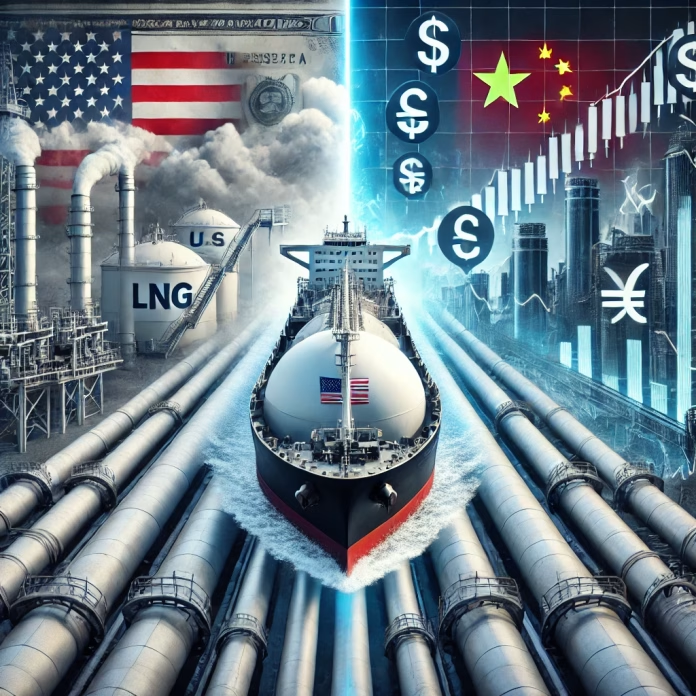
The ongoing trade tensions between the United States and China have taken a new turn, with significant implications for the liquefied natural gas (LNG) industry. In a move that has sent ripples through global energy markets, China has announced a 15% tariff on US LNG imports, effective February 10, 2025. This decision comes as a direct response to new levies imposed by the United States on Chinese goods, marking another chapter in the prolonged trade dispute between the world’s two largest economies.

Impact on US LNG Exports

While the US LNG export market to China is relatively small, it has been growing steadily in recent years. In 2024, US LNG accounted for approximately 5% of China’s total LNG imports. This tariff now puts that growth trajectory at risk and raises questions about the future of US-China energy trade.

Key Points:

  • The 15% tariff targets a niche but expanding market segment
  • US LNG exports to China have been increasing year-over-year
  • The move could potentially slow down or reverse this growth trend

Global Trade Flow Uncertainty

The introduction of this tariff adds a layer of complexity to global LNG trade flows. Industry analysts are closely watching how this development might reshape supply chains and alter buying patterns among Asian LNG importers.

Potential Consequences:

  • Redirection of US LNG cargoes to other markets
  • Increased competition in non-Chinese Asian LNG markets
  • Possible opportunities for other LNG-exporting nations to fill the gap in Chinese demand

Pressure on Asian Spot LNG Prices

The tariff’s implementation could have a domino effect on LNG pricing, particularly in the Asian spot market. As US LNG becomes less competitive in China due to the added cost, it may lead to:

  • Downward pressure on Asian spot LNG prices
  • Increased price volatility in short-term LNG contracts
  • Potential renegotiation of long-term supply agreements

Broader Energy Market Reactions

The announcement of the tariff has already had a noticeable impact on global energy markets. Crude oil prices experienced a 2% drop following the news, indicating broader concerns about energy demand and trade stability.

Market Responses:

  • Immediate decline in crude oil prices
  • Increased uncertainty in energy futures markets
  • Potential reassessment of energy investment strategies

Long-term Implications for US-China Energy Relations

This latest development in the trade war raises questions about the long-term energy relationship between the United States and China. It may prompt both countries to:

  • Reassess their energy security strategies
  • Explore diversification of energy sources and partners
  • Invest in domestic energy production capabilities

Conclusion

The imposition of a 15% tariff on US LNG imports by China marks a significant escalation in the ongoing trade dispute. While the immediate impact may be limited due to the current size of US LNG exports to China, the long-term implications for global energy markets could be substantial. As the situation evolves, industry stakeholders will need to closely monitor developments and adapt their strategies accordingly.Stay tuned for updates on this developing story and its impact on global energy markets.

Seaspan Completes Canada’s 1st LNG Bunkering

0
Seaspan Energy -LNG Bunkering

Seaspan Energy Completes Canada’s First Ship-to-Ship LNG Bunkering in Vancouver


In a groundbreaking development for the maritime industry, Seaspan Energy has successfully conducted Canada’s first-ever ship-to-ship LNG bunkering operation in the Port of Vancouver. This milestone event, which took place on February 3, 2025, marks a significant step forward in the adoption of cleaner fuel alternatives for the shipping sector.

A Historic Moment for Canadian Maritime Industry

The inaugural bunkering operation was performed by the Seaspan Lions, a vessel aptly named after the iconic twin peaks of Vancouver’s North Shore. These peaks, known as Ch’ich’iyúy Elxwíkn or “Twin Sisters” in the Squamish Nation language, symbolize the deep connection between this technological advancement and the rich cultural heritage of the region.

Harly Penner, President of Seaspan Energy, emphasized the importance of this achievement, stating, “Completing our first successful bunkering in local waters is a major milestone for Seaspan Energy and marks the introduction of a low-carbon fuel alternative from the Port of Vancouver and beyond.” This statement underscores the company’s commitment to sustainable shipping practices and its role in shaping the future of maritime transportation.

Expanding LNG Bunkering Capabilities

The successful operation in Vancouver follows Seaspan Energy’s first ship-to-ship LNG bunkering, which took place in December 2024 at the Port of Long Beach. This earlier operation, involving a containership, demonstrated the company’s growing expertise in LNG bunkering techniques.

Seaspan Energy’s fleet now boasts three 112-meter long LNG bunkering vessels, strategically positioned to serve the West Coast of North America. This fleet expansion reflects the company’s readiness to meet the increasing demand for LNG as a marine fuel and its ability to adapt to the evolving global LNG fuel market.

The Rise of LNG as a Cleaner Marine Fuel Alternative

Environmental Benefits of LNG

Liquefied Natural Gas (LNG) has gained traction as a cleaner alternative to traditional marine fuels. Its use can significantly reduce emissions of sulfur oxides, nitrogen oxides, and particulate matter, contributing to improved air quality in port cities and coastal areas. Additionally, LNG can help reduce greenhouse gas emissions, aligning with global efforts to combat climate change.

Meeting Regulatory Requirements

The adoption of LNG as a marine fuel is partly driven by increasingly stringent environmental regulations in the shipping industry. The International Maritime Organization (IMO) has set ambitious targets for reducing greenhouse gas emissions from ships, and LNG is seen as a viable transitional fuel to help meet these goals.

Implications for the Port of Vancouver and Beyond

Enhancing Vancouver’s Maritime Competitiveness

The introduction of LNG bunkering capabilities in the Port of Vancouver positions it as a progressive and environmentally conscious maritime hub. This development could attract more eco-friendly vessels to the port, potentially boosting its competitiveness in the global shipping market.

Ripple Effects on the Local Economy

The establishment of LNG bunkering infrastructure and services in Vancouver is likely to create new job opportunities and stimulate economic growth in related sectors. It may also encourage further investment in clean energy technologies and sustainable shipping solutions.

Challenges and Future Outlook

Infrastructure Development

While the successful bunkering operation is a significant milestone, the widespread adoption of LNG as a marine fuel will require continued investment in infrastructure. This includes storage facilities, specialized vessels, and training programs for personnel involved in LNG handling and bunkering operations.

Market Dynamics

The future growth of LNG bunkering will depend on various factors, including the price of LNG relative to other fuels, the pace of fleet renewal, and the development of other alternative fuels. Seaspan Energy’s expansion of its LNG bunkering fleet indicates confidence in the long-term viability of this fuel option.

Conclusion

Seaspan Energy’s successful completion of Canada’s first ship-to-ship LNG bunkering operation in Vancouver marks a pivotal moment in the country’s maritime industry. This achievement not only demonstrates the company’s technical capabilities but also signals a shift towards cleaner and more sustainable shipping practices. As the global LNG fuel market continues to evolve, Vancouver is now well-positioned to play a leading role in the transition to greener marine transportation. The coming years will likely see further developments in this space, with potential benefits for the environment, the local economy, and the broader shipping industry.

Seaspan Energy -LNG Bunkering

Source : Seaspan Energy

Green Shipping: Beyond LNG in 2025

0
Green Shipping
#image_title

Green Shipping: Carbon Capture and Ammonia Power Gain Traction in Maritime Industry

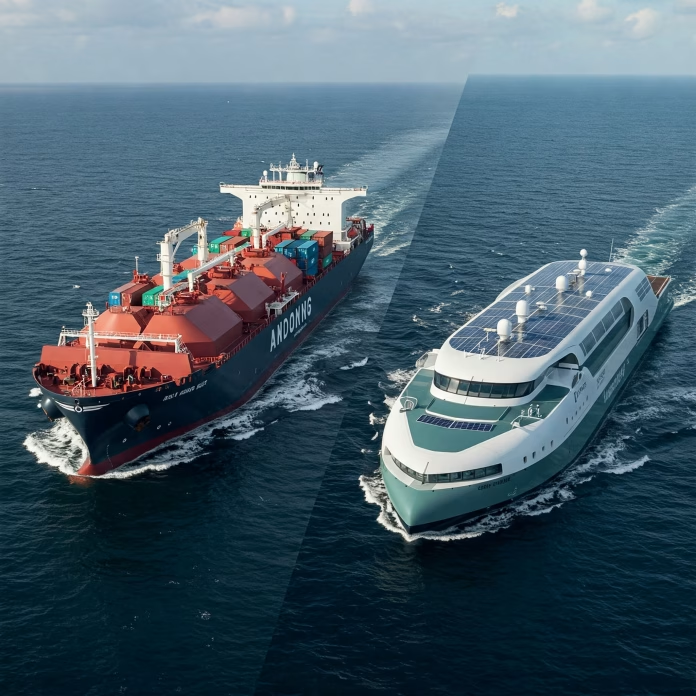
As the maritime sector pushes towards decarbonization, LNG continues to dominate headlines. However, January 2025 witnessed a significant surge in alternative energy solutions, particularly in carbon capture systems and ammonia-powered vessels. These emerging technologies are reshaping the industry’s approach to emissions reduction and sustainable shipping.

Carbon Capture Systems: A Game-Changer for Maritime Emissions

Carbon capture and storage (CCS) technology has emerged as a promising solution for reducing greenhouse gas emissions in the shipping industry. This innovative approach allows vessels to continue using traditional fuels while significantly cutting their carbon footprint.

Onboard Carbon Capture Systems

Onboard carbon capture (OCC) technologies are gaining traction as an effective method to reduce carbon emissions from ships during operation. These systems can be broadly categorized into two types:

  1. Post-combustion systems: These capture CO2 from exhaust gases, separating and storing it onboard for later offloading.
  2. Pre-combustion systems: These separate carbon from the fuel before combustion, producing hydrogen for use in dedicated energy conversion machinery.

Recent Developments in Maritime CCS

Several companies have made significant strides in developing and implementing CCS technologies for maritime applications:

  • Value Maritime’s Filtree system, approved by Lloyd’s Register, has been successfully fitted on two Eastern Pacific Shipping carriers. This compact, ‘plug and play’ solution can capture up to 40% of CO2 emissions, with potential for future improvements.
  • Hanwha Ocean has received Approval in Principle (AiP) for its energy-efficient OCCS system, which explores the use of ammonia water as a natural CO2 capture and storage method.
  • The UK’s Department for Transport funded a project by PMW Technology to study the A3C carbon capture process, which extracts CO2 from exhaust gases by freezing and sublimation.

Ammonia-Powered Vessels: A Zero-Carbon Alternative

While carbon capture technologies offer a pathway to reduce emissions from existing fuel types, ammonia-powered vessels represent a potential zero-carbon future for maritime transport.

Advantages of Ammonia as a Marine Fuel

  • Zero carbon emissions when burned
  • Higher energy density compared to hydrogen
  • Easier to store and transport than other alternative fuels

Industry Progress

Major shipping companies and engine manufacturers are investing heavily in ammonia-powered technology:

  • MAN Energy Solutions has announced plans to deliver its first ammonia-fueled, two-stroke engine in 2024.
  • Wärtsilä is developing ammonia-ready engines and fuel supply systems.
  • Several shipowners, including NYK Line and Maersk, have ordered ammonia-fueled vessels for delivery in the coming years.

Challenges and Future Outlook

Despite the promising developments in both carbon capture and ammonia-powered technologies, several challenges remain:

Carbon Capture Hurdles

  • Space and weight constraints on vessels
  • Energy requirements for capture and storage processes
  • Development of offloading infrastructure and CO2 transport networks

Ammonia Adoption Barriers

  • Production of green ammonia at scale
  • Safety concerns related to ammonia’s toxicity
  • Retrofitting existing vessels for ammonia use

The Road Ahead

As the maritime industry continues its journey towards decarbonization, a multi-faceted approach appears to be emerging. While LNG serves as a transitional fuel, carbon capture technologies offer a near-term solution for reducing emissions from conventional fuels. Simultaneously, ammonia and other zero-carbon fuels are positioning themselves as long-term alternatives for a truly sustainable shipping future.The success of these competing energy solutions will likely depend on factors such as:

  • Regulatory support and incentives
  • Technological advancements to improve efficiency and reduce costs
  • Development of necessary infrastructure for fuel production, distribution, and CO2 storage
  • Industry collaboration and knowledge sharing

As we move through 2025 and beyond, the maritime sector is poised for a transformative period. The interplay between carbon capture systems, ammonia-powered vessels, and other emerging technologies will shape the industry’s path to achieving ambitious emissions reduction targets and securing a sustainable future for global shipping.

LNG Bunkering Breakthrough in California

1
LNG Bunkering Breakthrough in California
#image_title

North America Advances LNG Bunker Infrastructure: Seaspan Pioneers Ship-to-Ship Transfer in California

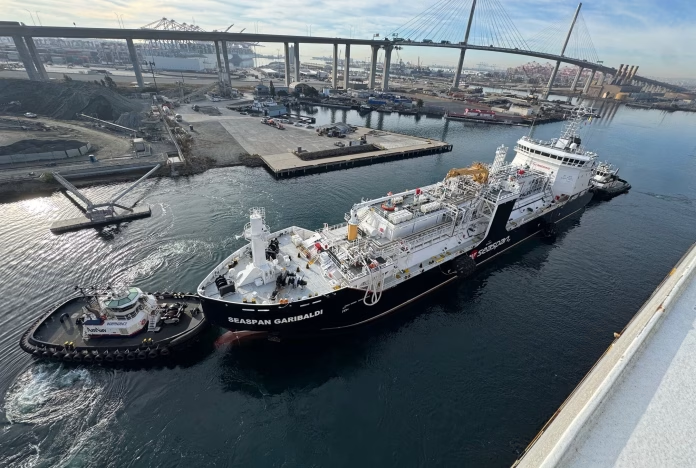
In a significant milestone for the maritime industry, Seaspan Energy has successfully conducted the first liquefied natural gas (LNG) ship-to-ship transfer on the West Coast of North America. This groundbreaking operation, which took place in the Port of Long Beach, California, marks a pivotal moment in the region’s transition towards cleaner marine fuels and enhanced sustainability in shipping.

A New Era for Pacific Trade Routes

The successful LNG bunkering operation opens up new possibilities for vessels plying Pacific trade routes. By establishing this capability in California, Seaspan has effectively created a strategic refueling point for LNG-powered ships, potentially reducing their environmental impact and operational costs.

Seaspan Garibaldi: Leading the Charge

At the heart of this achievement is the Seaspan Garibaldi, a state-of-the-art 7,600-cubic-meter LNG bunkering vessel. As the first of three planned bunkering ships in Seaspan Energy’s fleet, the Garibaldi represents a significant investment in LNG infrastructure. Its successful deployment demonstrates Seaspan’s commitment to supporting the maritime industry’s shift towards cleaner fuel alternatives.

Expanding LNG Bunkering Services

Seaspan’s initiative is not limited to Long Beach. The company has ambitious plans to extend its LNG bunkering services to Vancouver, British Columbia, creating a network of LNG refueling points along the West Coast. This expansion will provide ship operators with more options for accessing LNG fuel, potentially encouraging broader adoption of this cleaner energy source.

The Seaspan Lions: Reinforcing the Fleet

To bolster its LNG bunkering capabilities, Seaspan is preparing to introduce a second vessel, the Seaspan Lions. This addition will enhance the company’s ability to meet growing demand for LNG fuel in the region, ensuring reliable and efficient service for international shipping lines.

CMA CGM: A Key Partner in LNG Adoption

While Seaspan has not disclosed the specific containership involved in the inaugural bunkering operation, industry sources suggest it likely served a vessel from CMA CGM’s fleet. The French shipping giant has been at the forefront of LNG adoption, deploying numerous LNG-powered containerships on transpacific routes.

CMA CGM’s Commitment to Sustainability

CMA CGM’s investment in LNG-powered vessels, including its 15,000 TEU class ships, aligns perfectly with the new bunkering capabilities offered by Seaspan. This synergy between shipping lines and fuel providers is crucial for the widespread adoption of LNG as a marine fuel.

Environmental Benefits and Regulatory Compliance

The introduction of LNG bunkering services on the West Coast comes at a critical time, as the maritime industry faces increasing pressure to reduce its environmental footprint. LNG offers several advantages over traditional marine fuels:

  • Significant reduction in sulfur oxide (SOx) emissions
  • Lower nitrogen oxide (NOx) emissions
  • Decreased particulate matter
  • Reduced carbon dioxide (CO2) emissions

These environmental benefits help shipping companies comply with stringent international regulations, such as the IMO 2020 sulfur cap and upcoming carbon intensity reduction targets.

Technological Advancements in LNG Bunkering

Seaspan’s LNG bunkering vessels incorporate cutting-edge technologies to ensure safe and efficient fuel transfers. Developed in collaboration with Vard Marine Inc., these ships feature:

  • Advanced emission reduction systems
  • Underwater noise mitigation technology
  • Flexible transfer systems compatible with various ship types

These innovations not only enhance operational efficiency but also minimize the environmental impact of bunkering operations themselves.

Future Prospects for LNG in Maritime Transport

The successful launch of LNG bunkering services in Long Beach signals a bright future for LNG as a marine fuel on the West Coast. As more shipping lines invest in LNG-powered vessels, the demand for bunkering services is expected to grow. This could lead to:

  • Increased investment in LNG infrastructure at major ports
  • Development of new LNG supply chains
  • Creation of jobs in the LNG bunkering sector
  • Acceleration of the maritime industry’s decarbonization efforts

Conclusion: A Milestone for Sustainable Shipping

Seaspan’s completion of the first LNG ship-to-ship transfer in California represents more than just a technical achievement. It’s a clear indication that North America is making significant strides in developing the necessary infrastructure to support cleaner shipping practices. As the maritime industry continues its journey towards sustainability, operations like this will play a crucial role in facilitating the transition to alternative fuels and reducing the environmental impact of global trade.

Bunker One Shakes Up NW Europe LNG Bunkering Market

1
Bunker One is set to launch LNG bunker supply
#image_title

Bunker One Expands LNG Bunkering in Northwest Europe, Challenging Market Leaders

In a significant move for the maritime fuel industry, Bunker One has successfully launched its LNG bunkering operations in key Northwest European ports, including Rotterdam and Hamburg. This strategic expansion, which began in January 2025, marks a new era in the company’s portfolio and poses a direct challenge to Shell’s long-standing dominance in the region’s LNG supply market.

A Timely Entry into a Growing Market

Bunker One’s decision to enter the physical LNG supply market comes at a crucial time for the shipping industry. With increasingly stringent environmental regulations and a growing focus on decarbonization, LNG has emerged as a transitional fuel of choice for many shipowners and operators.

The company’s expansion aligns perfectly with the European Union’s Alternative Fuels Infrastructure Regulation (AFIR), which mandates that major ports offer LNG fueling options by 2026. This regulatory push has created a fertile ground for new entrants like Bunker One to establish a strong foothold in the market.

Strategic Positioning and Infrastructure

To support its new LNG bunkering operations, Bunker One has made several key investments:

  1. Dedicated LNG Entity: The company established Bunker One LNG BV, a specialized entity to manage its physical LNG fuel portfolio and last-mile delivery operations.
  2. Experienced Leadership: Michael Behmerburg, an industry veteran, has been appointed as Managing Director of Bunker One LNG BV, bringing valuable expertise to navigate the complex LNG market.
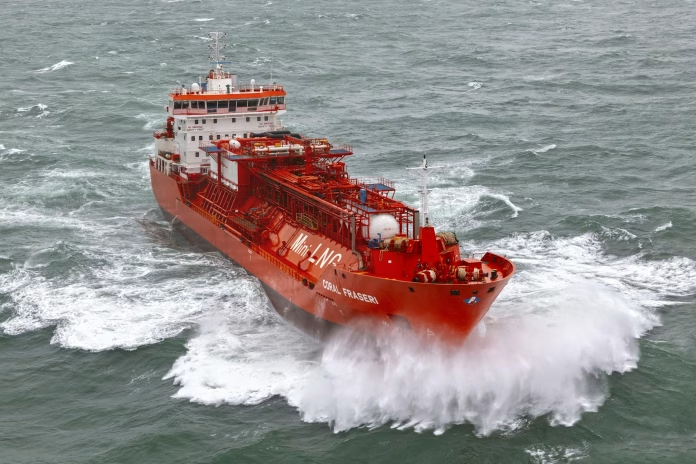
  3. State-of-the-Art Vessel: Bunker One has chartered the 10,000 cbm LNG bunker vessel “Coral Fraseri” from Anthony Veder, enhancing its capability to serve large vessels efficiently.
  4. Port Permits: The company is actively securing necessary bunker permits for key ports in Northwest Europe, ensuring a wide operational reach.

Market Impact and Competition

While Shell has long been the dominant player in Northwest Europe, Bunker One’s established presence in traditional marine fuels gives it a unique advantage in cross-selling LNG services to existing customers.

Peter Zachariassen, CEO of Bunker One, emphasized the importance of this move: “We are extremely pleased to be expanding our portfolio with LNG bunkering. This strategic decision positions us to meet the evolving needs of our customers and contribute to the maritime industry’s sustainability goals.”

Environmental Benefits and Future Outlook

The company is also introducing mass-balanced Liquefied Biomethane (LBM), catering to shipowners seeking even lower carbon footprint options. This dual approach allows Bunker One to serve a wide range of customers, from those taking initial steps towards cleaner fuels to early adopters of more advanced low-carbon solutions.

Valerie Ahrens, Senior Director of New Fuels and Carbon Markets at Bunker Holding (Bunker One’s parent company), highlighted the environmental benefits: “Fossil LNG can offer up to 23% in greenhouse gas reductions compared to conventional fuels. We see LNG as a stepping stone to bio-LNG and e-LNG, which will help the industry achieve the mid-century decarbonization targets set by the IMO.”

Challenges and Opportunities

While Bunker One’s expansion into LNG bunkering presents significant opportunities, it also comes with challenges:

  1. Infrastructure Development: Ensuring adequate LNG bunkering infrastructure across multiple ports requires substantial investment and coordination with port authorities.
  2. Market Volatility: LNG prices have been subject to significant fluctuations, which could impact demand and profitability.
  3. Technological Advancements: The rapid development of alternative fuels and propulsion technologies may affect long-term LNG demand.

Despite these challenges, Bunker One remains optimistic about the future of LNG in maritime transportation. The company’s move is seen as a strategic step towards a more diversified and sustainable fuel portfolio, positioning it well for the industry’s ongoing energy transition.

Conclusion

Bunker One’s entry into the Northwest European LNG bunkering market represents a significant shift in the region’s maritime fuel landscape.

As the shipping industry continues its journey towards decarbonization, Bunker One’s expanded offering of both conventional LNG and biomethane options provides shipowners with flexible solutions to meet their environmental targets. This move not only challenges the status quo but also contributes to the broader goal of reducing the maritime sector’s carbon footprint, setting the stage for a more competitive and sustainable future in ship fueling.


Source: Bunker One

2025 LNG Shipping Rate Recovery Trends

1
LNG Shipping Rate On Recovery
#image_title

 LNG Shipping Rates Show Recovery Signs: Analyzing the 2025 Rebound

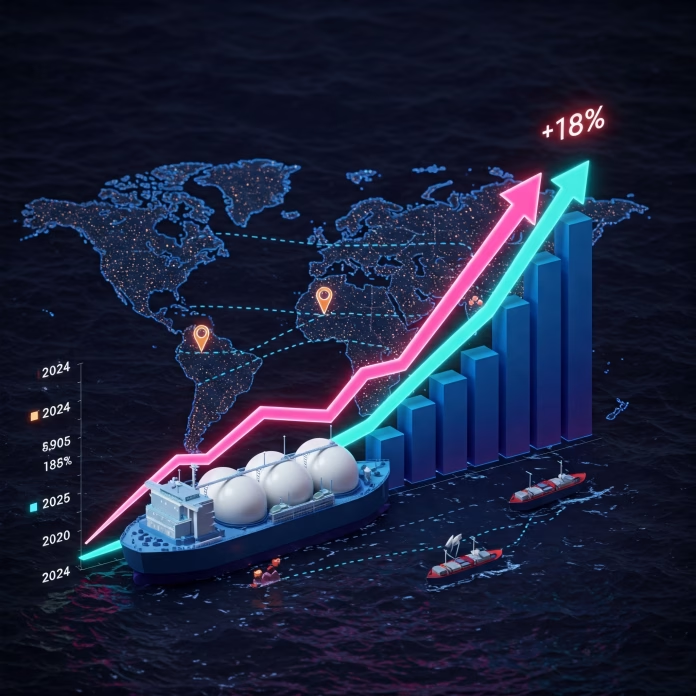
The LNG shipping market is showing tentative signs of recovery in early 2025, with spot rates climbing 18% month-over-month in January after hitting historic lows in late 2024. This upward trend, driven by shifting trade patterns and geopolitical disruptions, has sparked cautious optimism across the industry.

From Crisis to Catalysts: What’s Driving the Rebound?

Three primary factors are fueling the rate recovery:

  1. Surge in Asian Demand:
    China’s LNG imports rose 7% year-over-year in January 2025, driven by colder-than-expected weather and renewed industrial activity. Japan and South Korea followed suit, with imports increasing 5% as nuclear power plant outages forced utilities to rely on gas-fired generation.
  2. Longer Voyage Distances:
    Over 65% of Atlantic Basin LNG cargoes now take the Cape of Good Hope route to Asia, adding 10-14 days to voyages compared to Suez Canal transits. This rerouting, prompted by ongoing Red Sea tensions, has effectively absorbed 9-12 vessel equivalents from the global fleet.
  3. Seasonal Storage Drawdowns:
    European gas storage levels fell to 58% capacity by late January – 15 percentage points below the five-year average – triggering urgent restocking demand. This pulled additional vessels into Atlantic-to-Europe trades.

Rate Recovery in Numbers

Metric Dec 2024 Jan 2025 Change
Atlantic Spot Rates ($/day) 24,000 28,320 +18%
Pacific Spot Rates ($/day) 26,500 30,470 +15%
Time Charter Equivalents 40,600 47,500 +17%

Source: Drewry Maritime Research, Spark Commodities The Baltic Exchange forecasts further 15-20% gains through March 2025, potentially pushing average spot rates above $34,000/day – levels last seen in mid-2024.

Fleet Dynamics: A Double-Edged Sword

While demand improves, the LNG carrier fleet remains oversupplied:

  • 96 new vessels delivered in 2024
  • 89 additional ships scheduled for 2025 deliveries

However, three countervailing trends are easing capacity pressure:

  1. Accelerated Scrapping: 32 steam turbine carriers were recycled in Q4 2024 – the highest quarterly total since 2010.
  2. Layups: 14 older vessels entered extended idle periods in January.
  3. Slow Steaming: Average LNG carrier speeds dropped to 16.2 knots (-8% YoY), reducing effective capacity.

“The market’s absorbing newbuilds faster than expected,” notes Jason Feer of Poten & Partners. “But with 2025 fleet growth at 11% YoY, sustained recovery requires either stronger demand or more aggressive scrapping”

Geopolitical Wildcards Reshaping Trade

Recent developments are forcing complex route recalculations:

  • Red Sea Insurance Surcharges now add $0.15/MMBtu to Suez-bound LNG cargoes
  • Panama Canal Draft Restrictions limit Neopanamax transits to 24/month, down from 36 in 2023
  • US-Gulf to Asia Premiums: Cargoes bypassing both canals command $0.40/MMBtu price premiums

These disruptions have increased average voyage distances by 1,200 nautical miles for Asia-bound US cargoes, effectively tightening vessel supply.

Regional Demand Divergence

The recovery remains uneven across key markets:Asia

  • China’s 2025 import target: 85 million tons (+12% YoY)
  • India’s spot purchases up 22% month-over-month in January

Europe

  • LNG imports fell 9% YoY in January due to high storage
  • UK NBP prices lag JKM by $1.20/MMBtu, discouraging Atlantic imports

Americas

  • US LNG exports hit 12.9 Bcf/d in January (+18% MoM)
  • Brazil’s drought-driven hydropower crisis spurs 400,000 tons of emergency imports

Expert Forecasts: Cautious Optimism

Industry analysts present nuanced 2025 outlooks:

Organization 2025 Rate Forecast ($/day) Key Drivers
Drewry 32,000 – 35,000 Fleet attrition, US exports
Spark Commodities 28,500 – 31,000 Seasonal demand swings
Timera Energy 30,000 – 38,000 Geopolitical volatility

“The window for sustained recovery is narrow,” warns a Drewry analyst. “We expect Q1 gains to fade by mid-year unless winter-2025 storage injections underperform”.

The Road Ahead: Balancing Act in 2025

Six critical factors will determine if the recovery gains traction:

  1. Asian Demand Durability: Can China maintain import growth amid economic headwinds?
  2. European Storage Strategy: Will refill requirements outpace renewable energy adoption?
  3. Newbuild Delivery Pace: Will shipyards delay 2025 deliveries beyond Q3?
  4. Geopolitical Stability: Can Red Sea tensions de-escalate before summer?
  5. Bunker Price Spreads: Will LNG retain its $50/ton cost advantage over VLSFO?
  6. Weather Variability: Will La Niña conditions boost cooling demand in Q2?

Conclusion: A Fragile Recovery in Motion
The LNG shipping market’s January rebound marks a tentative shift from 2024’s downturn, but structural oversupply persists. While improved Asian demand and extended voyages provide near-term relief, the 89-vessel newbuild wave and 42 mtpa liquefaction capacity additions loom large.Successful navigation of 2025’s challenges will require operators to:

  • Optimize fleet deployment around volatile trade lanes
  • Secure term charters during rate spikes
  • Accelerate retirement of inefficient tonnage

As Poten’s Jason Feer summarizes: “This isn’t 2022’s supercycle – it’s a market learning to profit from controlled chaos”. With careful strategy, the sector may yet convert this fragile recovery into sustained momentum.

Sola’s FMC Reshapes LNG Maritime Rules

1
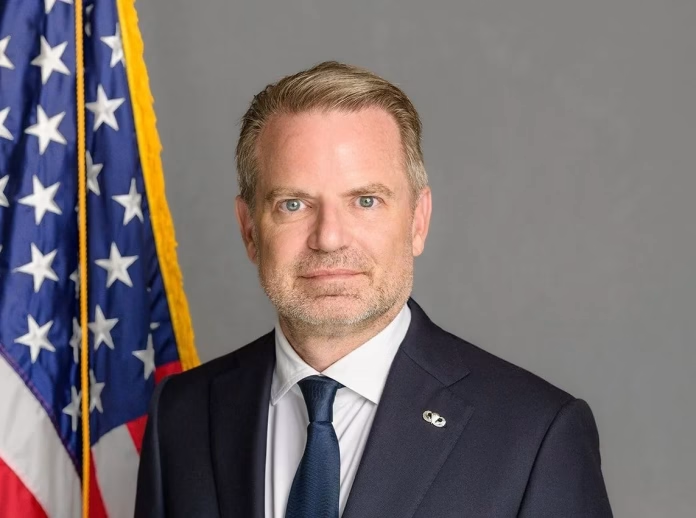
Chairman Louis E. Sola
#image_title

Maritime Regulatory Shifts: Sola’s FMC Leadership Charts New Course for LNG and Global Trade

The U.S. maritime regulatory landscape underwent a seismic shift in January 2025 when President Donald Trump designated Commissioner Louis E. Sola as Chairman of the Federal Maritime Commission (FMC). This leadership change signals a decisive pivot toward energy-driven trade policies, accelerated LNG infrastructure development, and a more assertive stance on global maritime governance. With Sola at the helm, industry stakeholders anticipate transformative reforms that could reshape port operations, decarbonization timelines, and America’s competitive position in global shipping.

A Regulator with Industry Credentials

Louis E. Sola brings a rare blend of maritime expertise and political acumen to the FMC. A former U.S. Army counterintelligence officer and Florida pilot commissioner, Sola built credibility through high-profile initiatives like leading the FMC’s COVID-19 cruise industry recovery task force. His 2024 renomination received bipartisan support from 73 trade and agriculture groups, reflecting broad industry confidence in his pragmatic approach.Sola’s early actions as chairman reveal three strategic priorities:

  1. Unlocking LNG’s Potential: Reversing Biden-era restrictions on fossil fuel exports
  2. Port Modernization: Accelerating approvals for LNG bunkering infrastructure
  3. Global Trade Enforcement: Challenging perceived anti-competitive practices at critical chokepoints like the Panama Canal

LNG Bunkering: From Regulatory Hurdles to Strategic Priority

The Sola-led FMC is implementing a pro-LNG playbook that aligns with Trump’s “America First Energy Policy”:Policy Reversals

  • Rescinded Treasury guidelines blocking multilateral development bank funding for fossil projects
  • Lifted Biden-era EXIM Bank constraints on LNG terminal financing
  • Fast-tracked 12 pending LNG bunkering facility applications across Gulf Coast ports

Infrastructure Push
Sola advocates replicating Europe’s LNG bunkering network, where 198 ports now offer services. Key initiatives:

  • $2.1B Port Revitalization Fund: Grants for LNG storage tanks and bunker barges
  • Standardized Permitting: 90-day approval timeline for compliant projects
  • Jones Act Waivers: Temporary exemptions for LNG bunker vessel construction

Industry response has been immediate:

  • Bunker One launched Northwest Europe-style LNG fueling in Texas/Louisiana
  • Seaspan completed West Coast’s first ship-to-ship LNG transfer
  • 63% of new U.S. vessel orders now LNG-capable vs. 41% in 2023

Decarbonization: Pragmatism Over Prescription

While maintaining rhetoric about emissions reduction, Sola’s FMC emphasizes bridge fuels over renewables:Revised Benchmarks

  • Recognized LNG’s 23-30% GHG reduction vs. traditional fuels
  • Extended 2050 decarbonization timelines for deep-sea shipping
  • Prioritized fleet modernization (avg. age: 22 years) over newbuild mandates

Incentive Structure

  • Tax credits for retrofitting existing vessels with LNG systems
  • R&D partnerships on methane slip reduction technologies
  • Port fee discounts for LNG-powered ships

Critics argue this stalls electrification, but Sola counters: “LNG provides achievable emissions cuts today while buying time for scalable alternatives.”

Global Trade: Asserting U.S. Maritime Interests

The FMC is adopting an aggressive posture on international disputes:Panama Canal Standoff
Sola’s Senate testimony highlighted concerns over:

  • Chinese operators controlling Atlantic/Pacific ports via no-bid contracts
  • Alleged toll reimbursements for Chinese carriers
  • Cybersecurity risks from Chinese-built canal infrastructure

The FMC now wields new tools:

  • Section 19 Fines: Up to $1.1M/day for discriminatory practices
  • Port Access Bans: Authority to block Panamanian-flagged vessels
  • Cargo Redirection: Incentivizing Suez/Cape routes via carrier agreements

Western Hemisphere Trade Bloc
Sola champions a U.S.-led infrastructure fund to counter China’s Belt and Road:

  • $7B initial allocation for LNG terminals in Brazil/Argentina
  • EXIM loan guarantees for South American port upgrades
  • Reciprocal trade pacts requiring LNG bunkering access

Industry Impact: Winners and Challenges

Beneficiaries

  • Gulf Coast Ports: Houston, Corpus Christi securing 68% of new LNG investments
  • Shipbuilders: Philly Shipyard’s $3B LNG tanker order backlog
  • Agribusiness: 22% reduction in grain export logistics costs

Friction Points

  • West Coast ports lagging in bunker infrastructure
  • Insurer resistance to older LNG-converted vessels
  • Environmental lawsuits over methane monitoring

The Road Ahead: 2025 Regulatory Calendar

Key milestones under Sola’s agenda:

  • Q2 2025: Final ruling on Panama Canal tariff review
  • Q3 2025: Mandatory LNG bunkering capability for TOP 10 U.S. ports
  • Q4 2025: New build subsidy program for U.S.-flag LNG carriers

As the FMC prepares its 2026-2030 strategic plan, Sola remains unequivocal: “Energy exports are national security priorities. We’ll remove barriers blocking American LNG from powering global commerce.”

This regulatory pivot positions LNG as both an economic catalyst and geopolitical tool—a calculated bet that could redefine maritime competitiveness for decades. While environmentalists decry slowed decarbonization, industry leaders praise the FMC for balancing climate goals with energy realities. As global LNG demand projections hit 450M tons annually by 2030, Sola’s policies aim to ensure U.S. suppliers dominate this $120B market. The coming years will test whether regulatory flexibility can indeed fuel both profits and progress.