LNG Safety and International Regulations: IMO, IGC Code and IGF Code
The international framework that governs LNG carriers and gas-fuelled ships — what each instrument covers and how they fit together.
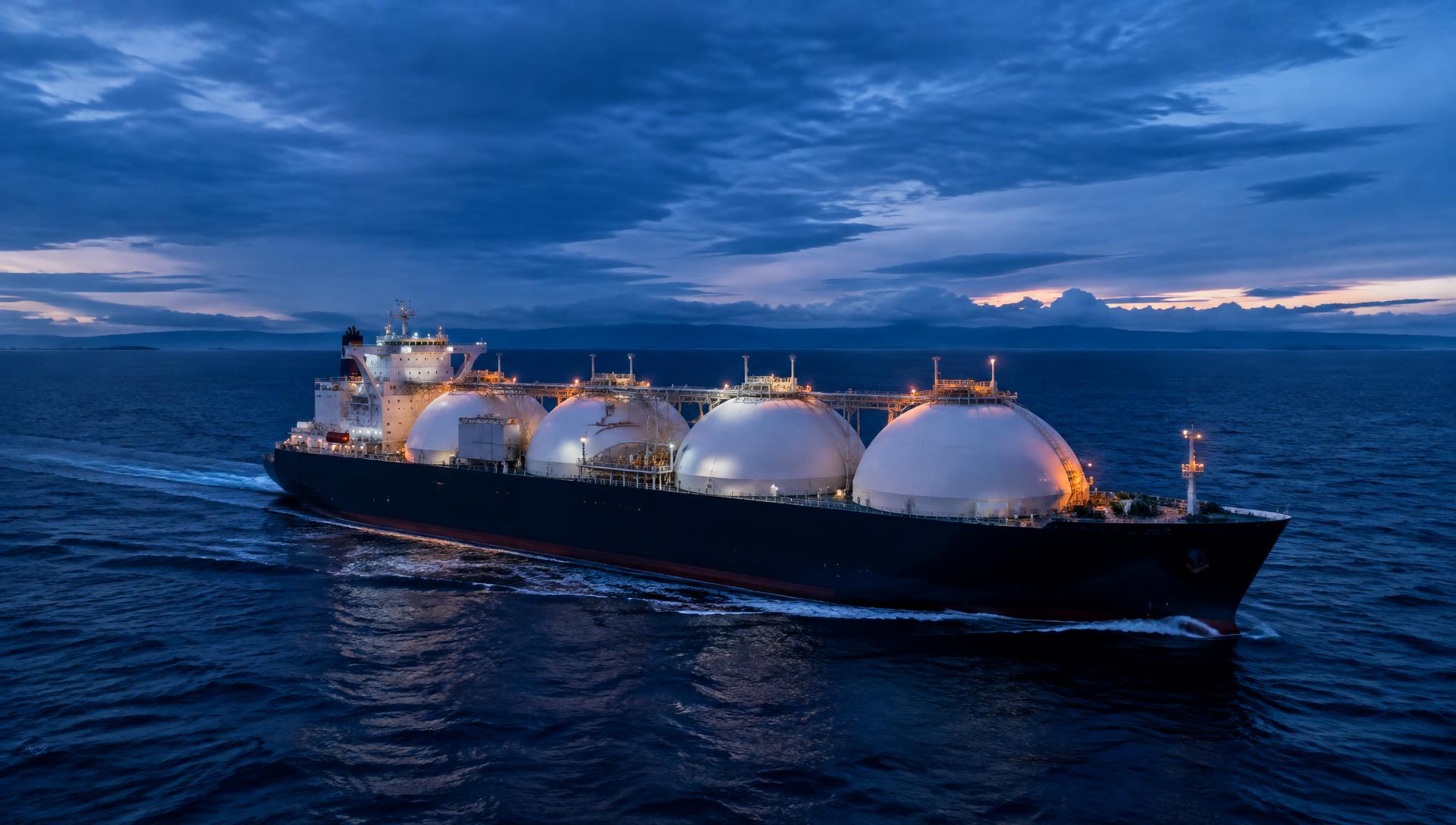
LNG at sea is governed by a layered framework. International conventions adopted by the International Maritime Organization (IMO) set binding requirements; classification societies translate them into detailed technical rules and surveys; flag states and port states enforce them; and industry bodies publish guidance on best practice. Understanding which instrument applies — and to which ship — is the first step towards compliance.
This guide is an orientation, not legal advice. Instruments are amended regularly. Always consult the current consolidated text published by the IMO, the requirements of the flag administration and the rules of the relevant classification society.
SOLAS: the legal foundation
The International Convention for the Safety of Life at Sea (SOLAS), 1974, is the principal treaty on ship safety. Two SOLAS chapters are central to LNG. Chapter VII (Carriage of dangerous goods), Part C, makes the IGC Code mandatory for ships carrying liquefied gases in bulk. Chapter II-1, through Part G, makes the IGF Code mandatory for ships using gases or other low-flashpoint fuels. Because the codes are mandatory through SOLAS, compliance is verified through statutory certification and survey.
The IGC Code: ships carrying liquefied gases in bulk
The International Code for the Construction and Equipment of Ships Carrying Liquefied Gases in Bulk (IGC Code) sets the standards for the safe carriage of liquefied gases, including LNG. The original Code was adopted in 1983; a comprehensively revised version was adopted in 2014 and applies to gas carriers whose keels were laid on or after 1 July 2016. Earlier ships continue to comply with the edition applicable at their construction.
The Code covers, among other things: ship survival capability and the location of cargo tanks; ship arrangements, including segregation of cargo areas; cargo containment system types and design loads; materials for cryogenic service; cargo piping and process pressure vessels; cargo pressure and temperature control; vent systems; environmental control of tank and hold spaces; electrical installations; fire protection and extinguishing; mechanical ventilation; instrumentation and automation, including gas detection; personnel protection; filling limits; and the use of cargo as fuel.
Ships complying with the IGC Code are issued an International Certificate of Fitness for the Carriage of Liquefied Gases in Bulk.
The IGF Code: ships using LNG as fuel
The International Code of Safety for Ships using Gases or other Low-flashpoint Fuels (IGF Code) was adopted in 2015 and entered into force on 1 January 2017. It applies to ships other than gas carriers that use low-flashpoint fuels, with detailed requirements developed first for natural gas. Gas carriers using their cargo as fuel remain under the IGC Code.
The IGF Code takes a goal-based approach and addresses: the arrangement and location of fuel tanks to limit damage risk; fuel containment systems; material and piping design; bunkering stations and arrangements; fuel supply to consumers; machinery space concepts, such as gas-safe and ESD-protected machinery spaces; fire safety; explosion prevention and area classification; ventilation; electrical installations; control, monitoring and safety systems; and operational requirements, including drills and procedures.
Work at the IMO on provisions for other low-flashpoint fuels, such as methanol, ammonia and hydrogen, continues. Readers should check the current IMO position, as interim guidelines and amendments develop over time.
STCW: crew training and certification
The International Convention on Standards of Training, Certification and Watchkeeping for Seafarers (STCW) sets mandatory competence requirements. Officers and ratings with responsibilities for cargo on liquefied gas tankers must hold basic or advanced training certification for liquefied gas tanker cargo operations. Seafarers on ships subject to the IGF Code must complete basic or advanced training for service on such ships. Training content covers the properties and hazards of LNG, cargo or fuel systems, safety and emergency procedures, and pollution prevention.
MARPOL Annex VI and greenhouse-gas measures
MARPOL Annex VI regulates air emissions from ships, including sulphur oxides, nitrogen oxides and energy efficiency. LNG as a fuel contains negligible sulphur, which is one reason for its adoption. Energy-efficiency measures — the Energy Efficiency Existing Ship Index (EEXI) and the Carbon Intensity Indicator (CII) rating, which took effect in 2023 — apply to LNG carriers and many gas-fuelled ships.
In July 2023 the IMO adopted its revised GHG strategy, which includes a goal of net-zero greenhouse-gas emissions from international shipping by or around 2050 and calls for a basket of technical and economic measures. Because methane is a potent greenhouse gas, the treatment of methane slip and of well-to-wake emissions is central to how LNG fuel will be assessed under future measures. This is an area of active regulatory development; readers should consult the latest IMO decisions.
Classification societies and industry guidance
Classification societies, many of which are members of the International Association of Classification Societies (IACS), publish rules that implement and extend the IMO codes, approve designs and carry out surveys, often acting as recognised organisations on behalf of flag states. IACS also develops unified requirements and interpretations.
Industry bodies play an important role in operational safety. SIGTTO publishes guidance on gas carrier and terminal operations, including ship–shore interface and compatibility. SGMF publishes guidance on gas as a marine fuel, including bunkering. ISO 20519 provides an international standard for LNG bunkering transfer systems. These documents are not all legally binding, but they are widely referenced by ports, terminals and charterers.
Key hazards and how the framework addresses them
Cryogenic exposure. Contact with LNG or cold vapour can cause severe cold burns and embrittle ordinary steel. The codes address this through material requirements, spill protection such as drip trays and water curtains, and personal protective equipment.
Flammability. Natural gas vapour is flammable within a limited concentration range in air. Prevention relies on keeping air out of cargo and fuel systems, gas detection, ventilation, hazardous area classification and control of ignition sources.
Pressure build-up. Boil-off increases tank pressure. The codes require pressure control systems and relief valves sized for defined scenarios.
Rapid phase transition and pool behaviour. Large spills onto water can vaporise rapidly. Design and operational measures aim to prevent spills and to limit their size through ESD systems and emergency release couplings.
Asphyxiation. Natural gas and nitrogen can displace oxygen in enclosed spaces, which is why enclosed space entry procedures and atmosphere testing are essential.
Frequently asked questions
Does an LNG carrier burning boil-off gas fall under the IGF Code?
No. Gas carriers using cargo as fuel are covered by the IGC Code. The IGF Code applies to other ship types using low-flashpoint fuels.
Which IGC Code edition applies to my ship?
It depends on the construction date. The revised Code applies to ships with keels laid on or after 1 July 2016; earlier ships comply with the edition applicable when they were built. Confirm with your flag administration and classification society.
Are SIGTTO and SGMF guidance documents mandatory?
They are industry guidance rather than international law, but ports, terminals and charterers frequently require compliance with them, which makes them effectively expected practice.
Related articles
A practical reading guide to gas-fuelled ship requirements
Illustrative orientation to the international framework for gas-fuelled ships. Demonstration content only.
Crew competency on gas-fuelled ships: what training covers
Illustrative overview of basic and advanced training themes. Demonstration content only.
Methane slip: what the term means and why it matters
Illustrative primer on unburned methane in engine exhaust. Demonstration content only.